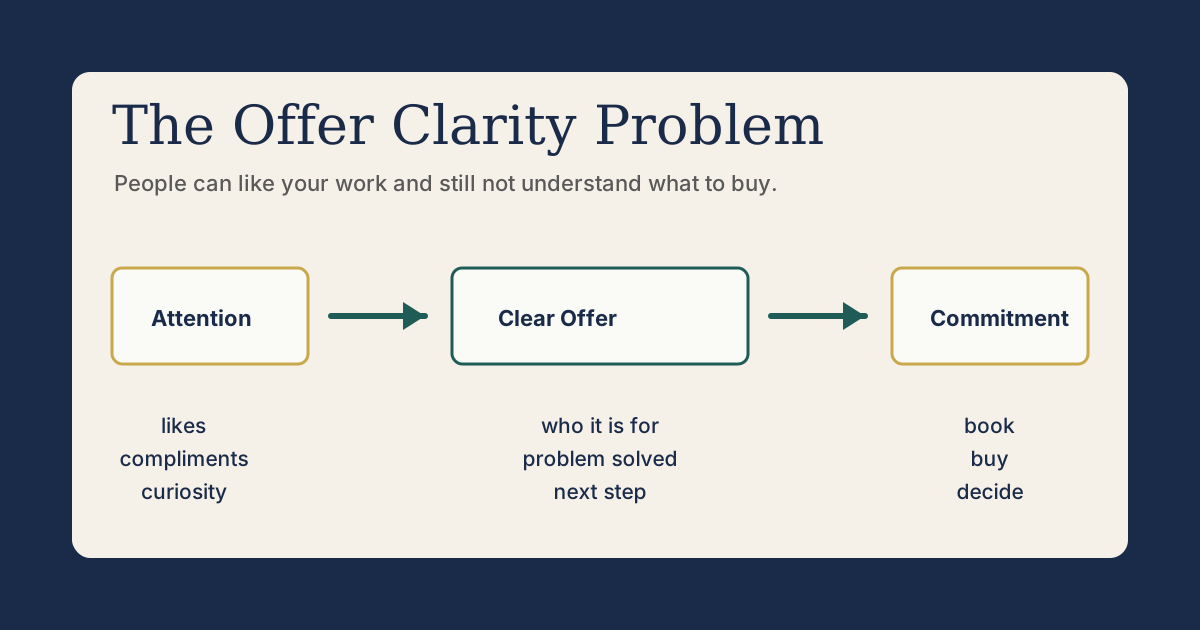
People are watching.
They like your posts. They compliment your work. They say your idea is powerful. They may even tell you, "This is needed."
But they do not buy.
At first, this feels confusing. You think the problem is visibility, so you post more. You think the problem is trust, so you explain more. You think the problem is price, so you discount.
But the result stays the same: people engage, but they do not commit.
The problem may not be your talent, your effort, or even your audience. The problem may be that your offer is not clear enough to buy.
Liking Is Not Buying
A person can like your work and still not understand what to do next.
They can respect your expertise and still not know which service fits them. They can enjoy your content and still not feel enough urgency to act. They can believe you are talented and still not understand the outcome you provide.
This is why many entrepreneurs misread engagement. They assume likes mean demand. They assume compliments mean intent. They assume questions mean readiness.
Sometimes they do. But often, they only mean curiosity.
Curiosity is not the same as commitment.
A business cannot survive on people finding your work interesting. It needs people to understand why your offer matters now.
The Offer Clarity Problem
An offer clarity problem happens when the audience can see your activity but cannot clearly understand your value.
They see you posting. They see you working. They see you talking about your field. They may even know you are good.
But they cannot quickly answer these questions:
- What exactly do you sell?
- Who is it for?
- What problem does it solve?
- What result will I get?
- How does it work?
- Why should I choose this now?
- What is the next step?
When these questions are unclear, people delay. They may not reject you directly. They simply do nothing.
That silence is not always lack of interest. Sometimes it is lack of clarity.
Many Entrepreneurs Sell Their Skill, Not Their Offer
This is a common mistake.
A coach says, "I help people gain clarity." A designer says, "I create beautiful designs." A consultant says, "I help businesses grow." A writer says, "I write content."
These statements may be true, but they are often too broad. They describe the skill. They do not make the buying decision clear.
People do not only buy skills. They buy a solution to a felt problem.
They do not wake up thinking, "I need someone with general expertise." They think, "I am stuck," "I need more clients," "My website does not convert," or "My offer is not selling."
The clearer the problem, the easier it is for the person to recognize themselves. The clearer the outcome, the easier it is for them to take action.
The Audience Should Not Have to Decode You
Some businesses make the audience work too hard.
The audience has to read ten posts to understand what is being sold. They have to guess whether the service is for beginners or advanced clients. They have to interpret vague words like growth, clarity, transformation, mindset, strategy, branding, or success.
When the audience has to decode your business, many people leave quietly.
Not because they dislike you. Because confusion creates friction. And friction delays buying.
Your job is not to sound impressive. Your job is to make the decision easier.
Signs Your Offer Is Unclear
You may have an offer clarity problem if people often praise your work but do not ask about buying.
You may have an offer clarity problem if people say, "I love what you do," but cannot explain what you actually sell.
You may have an offer clarity problem if every sales conversation starts with you explaining the basics from zero.
You may have an offer clarity problem if your audience is engaged, but your inquiries are weak.
You may have an offer clarity problem if your content gets attention but your call-to-action gets ignored.
The clearest sign is this: people are close enough to appreciate you, but not clear enough to buy from you.
That is a dangerous middle ground. It gives you hope, but not revenue.
The Difference Between an Idea and an Offer
Many entrepreneurs are in love with their idea. But an idea is not an offer.
An idea is what you want to create. An offer is what someone can understand, value, and buy.
An idea may sound exciting to you. An offer must make sense to the buyer.
An idea says, "I want to help people."
An offer says, "I help this specific type of person solve this specific problem through this specific process so they can reach this specific outcome."
A business does not grow because the founder has a good idea. It grows when the market understands the offer.
Your Offer Needs Four Clear Parts
A strong offer does not need to be complicated. But it does need to be clear.
1. Who Is This For?
Do not say everyone. Everyone is not a market. The more general your audience, the harder it is for people to recognize themselves.
A clear offer names the person: solo founders with too many business ideas, professionals stuck in the wrong career, couples stuck between staying and leaving, or small business owners whose service is not converting.
2. What Problem Does It Solve?
The problem must be concrete. Not just growth, clarity, confidence, or strategy. The buyer must be able to connect the offer to a problem they are already feeling.
3. What Outcome Can They Expect?
People need to know what changes after working with you. Will they leave with a decision map, a focused business direction, a clearer offer, a role transition plan, or a practical next step?
4. What Is the Next Step?
Many businesses lose buyers at the action stage. The content is good, the idea is interesting, and the service may be useful, but the next step is unclear.
Should they book a call, fill a form, send a message, buy directly, join a waitlist, or download something? If the offer is useful, make the next step simple.
Why More Content Does Not Always Fix the Problem
When an offer is unclear, many people try to solve it by posting more.
More posts. More reels. More stories. More emails. More explanations.
But unclear offers do not become clear through volume. They become clear through structure.
If ten posts are vague, the eleventh post will not automatically fix the problem. You may simply create more confusion at a faster speed.
Content can create attention. But the offer must convert that attention.
Do Not Confuse Trust With Clarity
Trust matters. People buy from people they trust.
But trust is not the only factor. Sometimes people trust you and still do not buy because they do not understand the offer.
They may believe you are skilled. They may respect your thinking. They may enjoy your content. But if the offer is unclear, trust does not know where to go.
Trust needs direction. It needs a path. It needs a specific invitation.
The Hidden Cost of an Unclear Offer
An unclear offer does not only reduce sales. It drains the founder.
You keep explaining yourself. You keep customizing every conversation. You keep wondering why people are not buying. You keep changing your messaging. You keep doubting your pricing.
Eventually, your business becomes heavier than it needs to be. Not because the work is bad. Because the offer is not carrying enough clarity.
A clear offer reduces emotional labor. It gives your business a stronger center. It helps your content, sales calls, website, and messaging point in the same direction.
The Offer Clarity Test
Before you create another service, campaign, or content plan, test your offer.
- Can a stranger understand what I sell in ten seconds?
- Can my ideal client recognize themselves immediately?
- Is the problem specific enough?
- Is the outcome clear enough?
- Is the process easy to understand?
- Is the next step obvious?
- Can someone explain my offer to another person without needing me?
If the answer is no, do not rush to market harder. First, clarify the offer.
A Simple Offer Clarity Framework
Use this structure:
I help [specific person] who is struggling with [specific problem] to achieve [specific outcome] through [specific process or service].
For example: I help solo founders with too many business ideas choose one focused direction and build a practical execution plan.
This kind of sentence may feel simple. That is the point. A clear offer should not need a long explanation before someone understands it.
What to Remove From Your Offer
Sometimes clarity comes from removing, not adding.
Remove vague promises. Remove too many audiences. Remove too many outcomes. Remove language that sounds impressive but does not help the buyer decide. Remove unnecessary options. Remove weak calls-to-action.
A strong offer is not only about what you include. It is also about what you refuse to include.
Focus creates conversion. Confusion creates delay.
Your Website and Content Must Carry the Offer
Your website should not only display your work. It should guide the buyer.
A visitor should quickly understand what you do, who you help, what problems you solve, what sessions or services are available, what each offer is for, and how to take the next step.
If your website feels like a collection of ideas but not a clear path, people may read and leave.
Content works the same way. A good article, post, or video helps the reader say: "This is my problem. I understand it better now. This person sees the pattern. I want help with this."
If your content creates awareness but never shows a next step, the audience becomes passive.
The Right Offer Makes Marketing Easier
When the offer is clear, marketing becomes simpler.
You know what to talk about. You know who you are speaking to. You know which problems to name. You know which objections to answer. You know what call-to-action to repeat.
You stop creating random content. You start building a clear path.
Final Thought
If people like your work but do not buy, do not immediately assume the market is wrong, your price is too high, or you need to post more.
First, check the offer.
Is it clear? Is it specific? Is it easy to understand? Is it connected to a real problem? Does it create a visible outcome? Does it tell the buyer what to do next?
People cannot buy what they cannot understand. They cannot commit to what feels vague. They cannot act on an offer that requires too much decoding.
You may not need more visibility. You may need a clearer offer.
Why do people like my work but not buy?
They may respect your work but still not understand what you sell, who it is for, what outcome it creates, or what step to take next.
Is offer clarity different from visibility?
Yes. Visibility creates attention. Offer clarity converts attention into a decision by making the buyer, problem, outcome, and next step clear.
What should a clear offer include?
A clear offer names who it is for, what problem it solves, what outcome it creates, and what action the buyer should take next.
Need Business Focus?
If your business has attention but not conversion, ideas but not execution, or activity but not clear revenue movement, the problem may not be effort. It may be focus.
A structured Business Focus session can help you clarify your offer, reduce scattered activity, and identify the next move that actually matters.