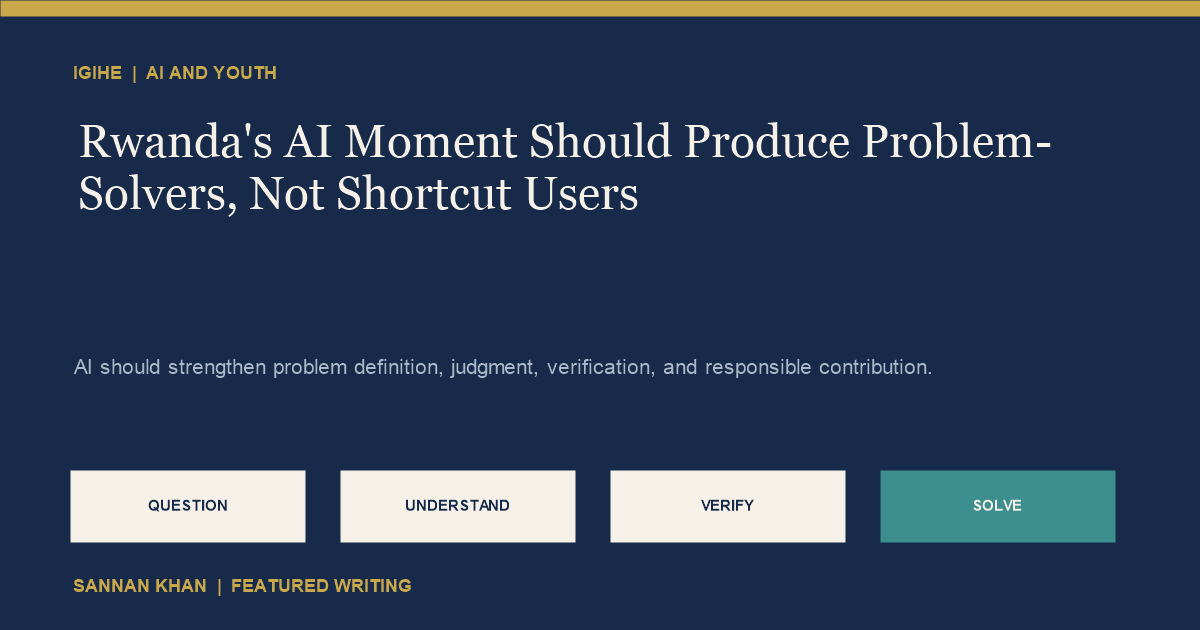
The complete article remains on the publisher's website. This original feature summary connects its central question to related frameworks and services on SannanKhan.com.
It requires problem definition, domain understanding, verification, ethical judgment, communication, and the ability to use AI as a tool without surrendering responsibility for the result.
A shortcut can hide a capability gap
AI can help people research, draft, test, and learn. It can also create the appearance of competence when users cannot explain the problem, evaluate the output, or take responsibility for mistakes.
The stronger standard is whether a person becomes more capable through use: asking better questions, checking assumptions, understanding context, and producing work that solves something real.
Build contributors, not only users
Schools, employers, and youth programs can combine tool access with projects, domain learning, collaboration, reflection, and clear quality standards. That makes AI part of capability development rather than a replacement for it.