The complete article remains on the publisher's website. This original feature summary connects its central question to related frameworks and services on SannanKhan.com.
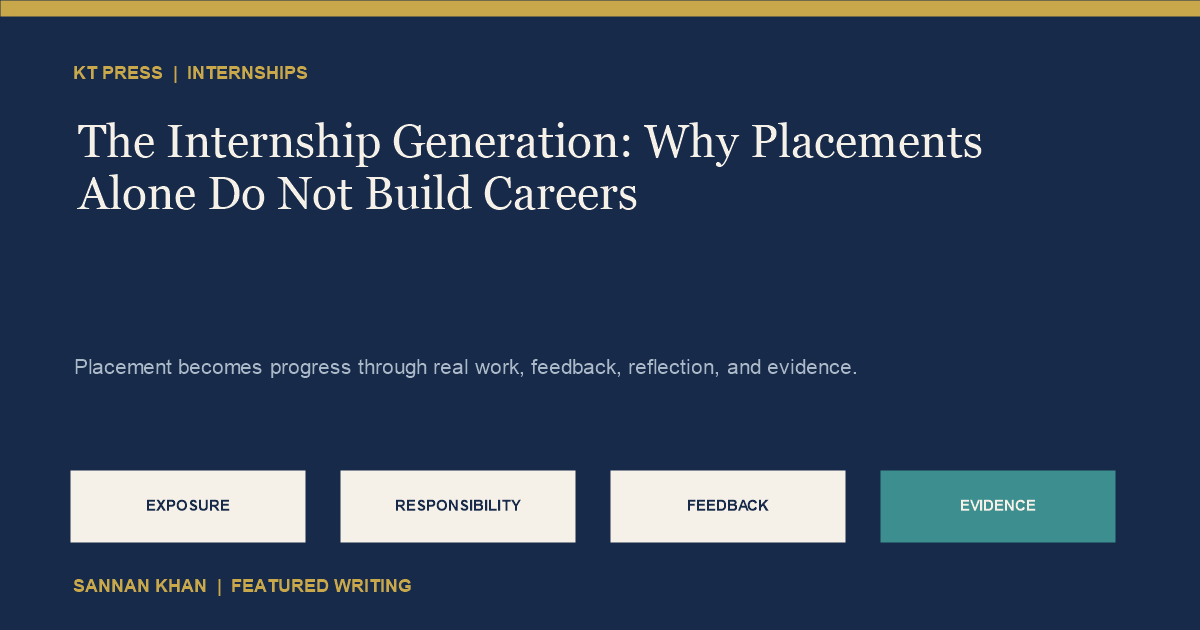
A useful internship gives meaningful exposure, clear expectations, feedback, responsibility, reflection, and evidence the participant can carry into the next opportunity.
Presence is not the same as development
A young person can spend weeks inside an organization without understanding how decisions are made, what reliable work looks like, or how their contribution connects to an outcome.
Employers and program partners improve internships when they define learning goals, assign real work, provide feedback, and help participants name what they learned. Interns also need to observe, ask, document, and take responsibility.
Convert exposure into evidence
The career value of an internship grows when the participant can explain the problem, their role, what changed, and what they would do differently. That turns time spent into credible evidence of readiness.