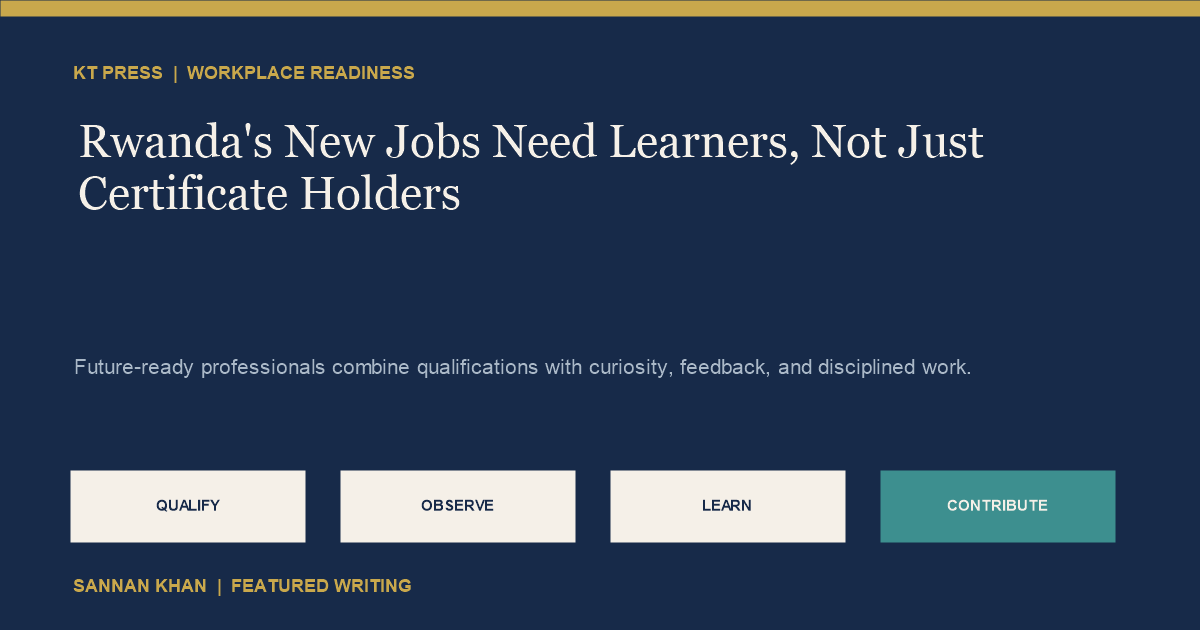
The complete article remains on the publisher's website. This original feature summary connects its central question to related frameworks and services on SannanKhan.com.
Because changing workplaces require people to learn unfamiliar systems, accept feedback, solve problems, communicate reliably, and keep developing after formal education ends.
A qualification is evidence of completion
Certificates matter, but they cannot fully show how someone responds to ambiguity, learns from correction, or contributes when the work changes. Employers also need evidence of reliability, judgment, and teachability.
The strongest early-career advantage is often the ability to enter a new environment without pretending to know everything. Curious professionals ask better questions, observe how work moves, and improve through disciplined practice.
Readiness is visible in behavior
Young professionals can build readiness through projects, internships, feedback, communication habits, and a record of finishing useful work. These signals make learning ability concrete.