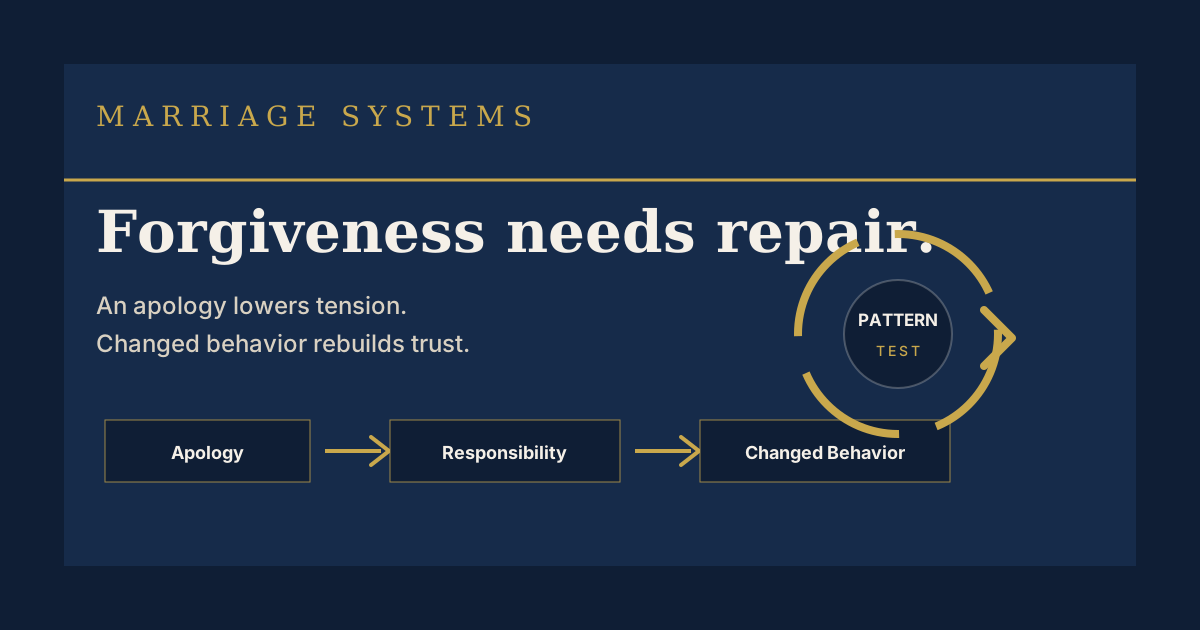
Forgiveness can be meaningful, but it does not fix a relationship pattern on its own. Repair requires responsibility, changed behavior, and follow-through over time, especially when the same harm keeps returning.
Summary
Forgiveness is important in any serious relationship.
But forgiveness alone does not repair a pattern.
You can forgive an apology, but if the same behaviour keeps returning, the relationship is not healing. It is repeating.
Many people stay stuck because they confuse forgiveness with resolution. They forgive because they want peace. They forgive because they love the person. They forgive because they do not want to keep fighting. They forgive because they hope this time will be different.
But if nothing changes after forgiveness, the issue is no longer only the mistake.
The issue is the pattern.
A relationship does not become safe because someone says sorry.
It becomes safer when apology turns into responsibility, and responsibility turns into different behaviour.
Key Takeaways
- Forgiveness is not the same as repair.
- An apology can acknowledge pain, but changed behaviour proves responsibility.
- If the same issue keeps returning, the relationship may be protecting a pattern.
- Repeated forgiveness without boundaries can teach the relationship that nothing has to change.
- You can forgive someone and still require accountability.
- Peace is not real if it only exists because one person keeps absorbing the damage.
Introduction
You forgave them.
Not once.
Many times.
You accepted the apology.
You tried to move forward.
You told yourself people make mistakes.
You reminded yourself that no relationship is perfect.
You chose peace.
You gave another chance.
And for a short while, things felt better.
The tone softened.
The tension reduced.
They may have been kinder, more attentive, more careful, or more emotional.
You wanted to believe the problem had finally changed.
Then the same thing happened again.
The same silence.
The same disrespect.
The same broken promise.
The same emotional distance.
The same blame.
The same avoidance.
The same conversation you thought you already had.
At some point, the pain is no longer only about what happened.
The pain becomes this question:
Why do I keep forgiving if nothing changes?
That question matters.
Because forgiveness can be beautiful when it leads to repair.
But forgiveness can become exhausting when it becomes the place where change is avoided.
Forgiveness Is Not the Same as Repair
Forgiveness is an internal decision.
Repair is a relational process.
Forgiveness may help you release bitterness.
Repair requires both people to rebuild trust.
Forgiveness can happen in your heart.
Repair must happen in the relationship.
This difference is important because many people forgive emotionally but never receive relational repair.
They let go of anger.
They soften their tone.
They stop bringing up the issue.
They return to normal.
But the relationship itself does not change.
No new boundary is created.
No new behaviour is practiced.
No responsibility is taken.
No pattern is interrupted.
That means the relationship did not repair.
It only reset emotionally.
A reset can feel peaceful for a moment, but if the system has not changed, the same problem will return.
Forgiveness can open the door to repair.
But forgiveness is not the repair itself.
The Apology Is Only the Beginning
An apology matters.
It can show that the other person sees the pain they caused.
It can reduce defensiveness.
It can begin a healing conversation.
But an apology is not the final evidence of change.
It is the starting point.
A real apology should lead somewhere.
It should lead to ownership.
It should lead to reflection.
It should lead to behaviour change.
It should lead to a different response the next time the same situation appears.
If the apology ends the conversation but does not change the pattern, then the apology becomes a pressure release.
The tension goes down.
The relationship returns to normal.
But the underlying issue remains untouched.
This is why some apologies feel comforting in the moment but disappointing over time.
They make you feel heard briefly.
Then the pattern proves you were not heard deeply.
When Forgiveness Becomes a Cycle
There is a painful cycle many people know well.
Something happens.
You are hurt.
You bring it up.
They apologize.
You explain how deeply it affected you.
They promise it will not happen again.
You forgive.
Things improve for a short while.
Then the same issue returns.
You bring it up again.
They say sorry again.
You forgive again.
The cycle continues.
At first, you may think the problem is communication.
So you try to explain better.
You choose softer words.
You wait for the right moment.
You reduce your expectations.
You become more patient.
But eventually, you realize the issue may not be that they do not understand.
The issue may be that understanding has not become responsibility.
A repeated cycle is not solved by another emotional conversation alone.
It needs structure.
It needs boundaries.
It needs evidence of change.
The Difference Between a Mistake and a Pattern
A mistake is an event.
A pattern is a repeated system.
A mistake can happen once.
A pattern keeps returning.
A mistake may come from poor judgment, emotional stress, immaturity, pressure, or a bad moment.
A pattern reveals how the relationship functions over time.
This difference matters because forgiveness works differently in each case.
If someone makes a mistake, takes responsibility, changes behaviour, and does not repeat it, forgiveness can help the relationship heal.
But if someone repeats the same behaviour again and again, the issue is not only forgiveness.
The issue is whether the relationship is willing to confront the pattern.
A pattern needs more than an apology.
A pattern needs interruption.
A pattern needs consequences.
A pattern needs new behaviour.
A pattern needs truth.
If you treat every repeated pattern as an isolated mistake, you may keep forgiving the same wound in different forms.
Why You Keep Forgiving
You may keep forgiving because you love them.
You remember the good parts.
You know they are not only their worst behaviour.
You see their pain, stress, history, or struggle.
You believe they can change.
You want the relationship to work.
You do not want to become hard.
You do not want to be unfair.
You do not want one issue to destroy everything.
These reasons are human.
They do not make you weak.
But love can become dangerous when it keeps explaining the pattern without requiring responsibility.
You may also keep forgiving because conflict exhausts you.
It feels easier to forgive than to keep discussing the same issue.
It feels easier to move on than to risk another argument.
It feels easier to hope than to face the possibility that nothing is changing.
Sometimes forgiveness is not only mercy.
Sometimes forgiveness becomes avoidance.
Not because you do not care.
Because you are tired of what the truth may require.
Forgiveness Without Boundaries Can Protect the Problem
Forgiveness is not supposed to remove accountability.
But in many relationships, that is what happens.
Someone hurts you.
They apologize.
You forgive.
Then the relationship continues as if nothing needs to change.
No boundary is set.
No new agreement is made.
No consequence is attached to repetition.
No follow-up happens.
The person learns that apology restores access without requiring transformation.
This is not always intentional.
They may not consciously think, "I can keep doing this."
But the relationship system teaches it.
If every repeated behaviour ends with forgiveness and no change requirement, the pattern becomes protected.
Your forgiveness becomes the bridge back to normal.
But normal is where the problem lives.
That is why forgiveness sometimes needs a boundary beside it.
Not to punish.
To protect truth.
You Can Forgive and Still Require Change
Many people think forgiveness means they must stop asking for accountability.
That is not true.
You can forgive someone and still say, "This cannot continue."
You can forgive someone and still say, "I need to see change, not only hear an apology."
You can forgive someone and still say, "If this happens again, we need a different response."
You can forgive someone and still step back.
You can forgive someone and still ask for counselling, structure, or outside help.
You can forgive someone and still decide the relationship is not safe enough as it is.
Forgiveness does not mean pretending the wound did not happen.
It does not mean removing the need for repair.
It does not mean giving unlimited access to someone who keeps repeating harm.
Forgiveness can soften your heart.
But wisdom still has to protect your life.
The Question Is Not "Did They Say Sorry?"
The better question is:
What happened after the apology?
Did they reflect?
Did they take responsibility without blaming you?
Did they ask what repair would look like?
Did they change the behaviour?
Did they bring it up later without being forced?
Did they show awareness when the same trigger appeared?
Did they make it easier or harder for you to trust again?
The apology is not the full story.
The after-apology behaviour tells you more.
Some people apologize because they want repair.
Others apologize because they want relief from discomfort.
A repair apology moves toward change.
A relief apology moves toward silence.
You need to know which one you are receiving.
Signs the Apology Is Not Becoming Responsibility
One sign is that the apology is followed by the same behaviour.
They say sorry, but nothing changes.
Another sign is that they become impatient when you still need time.
They want immediate forgiveness, immediate closeness, and immediate normalcy.
But they do not want the slower work of rebuilding trust.
Another sign is that they apologize generally but avoid specifics.
They say, "I am sorry for everything," but they do not name what they did.
A vague apology can sound emotional while avoiding responsibility.
Another sign is that they blame the situation, stress, or your reaction.
They may say sorry, but the message underneath is still, "You made me do it," or "You are making this bigger than it is."
Another sign is that the apology only appears when they fear consequences.
They are sorry when you pull away.
They are sorry when you stop trying.
They are sorry when they feel you may leave.
But when the relationship feels secure again, the pattern returns.
That is not stable repair.
That is crisis response.
The Cost of Repeated Forgiveness Without Change
Repeated forgiveness without change slowly changes you.
At first, you feel loving.
Then you feel patient.
Then you feel tired.
Then you feel resentful.
Then you feel numb.
You may stop bringing things up because you already know how the conversation will go.
You may stop believing the apology even when the words sound sincere.
You may become emotionally guarded.
You may feel guilty for not trusting them.
You may question whether you are asking too much.
You may feel confused because the person can be loving in some moments and careless in others.
This is one of the hardest parts.
The relationship is not always bad.
There may be kindness, history, affection, shared memories, family, children, faith, or commitment.
That is why you keep trying.
But repeated forgiveness without change creates emotional exhaustion.
Not because you are unforgiving.
Because your trust keeps being asked to recover without enough evidence.
When Peace Is Actually Avoidance
After conflict, peace can feel like healing.
But not all peace is real.
Sometimes peace means the issue was addressed, responsibility was taken, and both people moved forward differently.
That is healthy peace.
Other times, peace means one person stopped talking about the issue.
The tension reduced, but the truth was not handled.
The wound was covered, not healed.
The pattern was paused, not changed.
That is avoidance disguised as peace.
You can usually feel the difference.
Real peace feels lighter.
Avoidant peace feels fragile.
Real peace creates trust.
Avoidant peace creates anxiety.
Real peace allows the issue to be remembered without fear.
Avoidant peace depends on nobody mentioning it again.
If your peace requires silence, it may not be peace.
It may be emotional management.
The Repair Test
If you want to know whether forgiveness is leading to repair, use this test.
1. Ownership
Does the person take responsibility without making you responsible for their behaviour?
Ownership sounds like:
"I did this."
"I understand how it affected you."
"I need to change this."
It does not sound like:
"I am sorry, but you also…"
2. Specificity
Can they name the issue clearly?
A person who cannot name what they did may not fully understand what needs to change.
Specificity matters because vague apologies create vague repair.
3. Behaviour
Does the behaviour actually change?
Not for one day.
Not only when you are upset.
But consistently enough that your nervous system begins to trust the difference.
4. Follow-Up
Do they return to the issue after the emotional moment has passed?
Repair is not only what happens during conflict.
It is what happens after the relationship feels normal again.
5. Pattern Interruption
When the old situation appears again, do they respond differently?
This is the real test.
A changed pattern proves more than a beautiful apology.
What to Do Before You Forgive Again
Before you forgive again, pause.
Not to punish them.
To understand what is happening.
Ask yourself:
Is this a mistake or a pattern?
Have I forgiven this same issue before?
What changed after the last apology?
Am I forgiving because I feel ready, or because I want the conflict to end?
What boundary is needed this time?
What would repair actually look like?
What evidence would help rebuild trust?
What happens if nothing changes again?
These questions may feel uncomfortable.
But they protect you from automatic forgiveness.
Automatic forgiveness can make you feel kind in the moment and powerless later.
Conscious forgiveness is different.
It sees the truth clearly.
Then it chooses the next step with wisdom.
How to Ask for Real Repair
You do not need to attack.
You do not need to give a speech.
You need to be clear.
You can say:
"I hear your apology, but I need us to talk about what will change."
You can say:
"This has happened before, so I cannot treat it like a one-time mistake."
You can say:
"I am willing to move forward, but not if moving forward means pretending the pattern is gone."
You can say:
"I need changed behaviour, not only reassurance."
You can say:
"If this happens again, we need a different structure, because I cannot keep repeating the same cycle."
This kind of conversation is not about control.
It is about responsibility.
A healthy relationship should be able to discuss repair without one person being punished for asking.
When They Say You Keep Bringing Up the Past
This is a common response.
"You always bring up the past."
Sometimes that may be true.
Old wounds can be brought into new situations unfairly.
But sometimes the past keeps coming up because it is not actually past.
It is still happening.
A repeated behaviour is not the past.
It is the present pattern.
If the same issue keeps returning, then bringing it up is not necessarily refusing to move on.
It may be an attempt to finally deal with what has never been repaired.
The past becomes easier to release when the present proves it is no longer repeating.
Trust is not rebuilt by demanding silence.
It is rebuilt by creating safety.
When Forgiveness Becomes Self-Abandonment
Forgiveness becomes self-abandonment when you repeatedly silence your own pain to protect the relationship from discomfort.
It becomes self-abandonment when you forgive before you have even processed what happened.
It becomes self-abandonment when you return to normal while your body still feels unsafe.
It becomes self-abandonment when you keep accepting promises that have no follow-through.
It becomes self-abandonment when you tell yourself, "At least they apologized," even though nothing is changing.
You can be compassionate without abandoning yourself.
You can be patient without ignoring the pattern.
You can love someone without letting the relationship train you to expect less and less.
Self-abandonment is not the price of commitment.
A healthy relationship should make room for your pain, not only their apology.
When to Stop Repeating the Same Conversation
There comes a point when another conversation may not be enough.
If you have explained the same pain many times, the issue may not be explanation.
If you have forgiven the same pattern many times, the issue may not be mercy.
If you have requested the same change many times, the issue may not be communication.
At some point, the question changes.
It is no longer:
"How do I explain this better?"
It becomes:
"What does this repeated pattern tell me?"
That does not always mean the relationship must end.
But it may mean the relationship needs stronger structure.
Counselling.
Coaching.
Boundaries.
Separation.
A clear repair agreement.
A timeline for change.
A serious conversation about what happens if the pattern continues.
A repeated pattern should not be handled with endless informal promises.
It needs structure.
Forgiveness Does Not Remove Consequences
This is important.
Forgiveness and consequences can exist together.
You can forgive someone and still need distance.
You can forgive someone and still change the level of access they have to you.
You can forgive someone and still require counselling.
You can forgive someone and still say, "I cannot continue like this."
You can forgive someone and still decide that trust has to be rebuilt slowly.
Consequences are not always punishment.
Sometimes consequences are the structure needed to make truth real.
Without consequences, repeated behaviour often continues because the relationship has no protective boundary.
Love without structure can become a place where patterns survive.
What Real Change Looks Like
Real change is not loud.
It is consistent.
It does not only appear when you are about to give up.
It continues after the emotional pressure reduces.
Real change sounds like ownership.
It looks like follow-through.
It feels like emotional safety increasing slowly over time.
The person does not only say, "I will change."
They begin to notice the pattern themselves.
They take action before you remind them.
They repair without being chased.
They accept the discomfort of accountability.
They do not punish you for needing time to trust again.
They understand that rebuilding trust is part of the consequence of breaking it.
That is change.
Not perfection.
But direction.
What If They Are Trying But Slowly?
Not all slow change is fake.
Some people genuinely struggle to change old patterns.
They may need time, tools, guidance, emotional skills, or support.
But slow change still has signs of responsibility.
A person who is trying does not make you carry the whole process alone.
They do not expect unlimited forgiveness without effort.
They do not make your pain the enemy.
They do not only change when they fear losing you.
They stay engaged.
They ask questions.
They notice slips.
They return to repair.
They are willing to get help.
Slow change can be real if responsibility is present.
But slow change without responsibility is often just delay.
The difference matters.
Final Thought
Forgiveness is powerful.
But forgiveness is not supposed to become the place where patterns hide.
If you keep forgiving and nothing changes, the relationship is not asking only for your mercy.
It is asking for your clarity.
You need to see whether this is a mistake or a pattern.
You need to see whether the apology is becoming responsibility.
You need to see whether peace is real or just silence.
You need to see whether your forgiveness is helping repair or protecting repetition.
You can forgive and still ask for change.
You can love and still require accountability.
You can be patient and still set a boundary.
You can move forward and still refuse to pretend the pattern has disappeared.
A healthy relationship does not depend on one person endlessly absorbing the same pain.
It depends on two people being willing to face the truth and change what keeps damaging the connection.
So before you forgive again automatically, pause.
Ask what repair requires.
Ask what the pattern is showing you.
Ask what boundary is needed.
Because forgiveness can open the door.
But only responsibility can rebuild the room.
Need Marriage Clarity?
If you keep forgiving the same issue and nothing changes, you do not need another cycle of hope, disappointment, apology, and silence.
You need clarity.
A structured Marriage Clarity session can help you understand whether the relationship is dealing with a mistake, a repeated pattern, emotional avoidance, or a deeper repair issue.
You do not need to carry the same pain in a different form.
You need to see what the pattern is actually asking you to decide.
Why do I keep forgiving someone who does not change?
You may still care about the person, hope the apology means something, fear the consequences of a boundary, or confuse forgiveness with an obligation to accept repeated behavior.
Can you forgive someone and still require change?
Yes. Forgiveness does not remove the need for responsibility, boundaries, or consequences. You can let go of revenge without agreeing to live with the same pattern.
How do I know if an apology is real repair?
Real repair includes a clear acknowledgement of the harm, changed behavior, willingness to discuss the impact, and consistent follow-through without making you manage the process.
Book a Marriage Clarity Session
If you keep forgiving the same issue and nothing changes, a Marriage Clarity Session can help you map whether this is a mistake, a repeated pattern, emotional avoidance, or a deeper repair issue.