If you know the next action, understand why it matters, have reasonable capacity, and still keep avoiding the discomfort, you are probably procrastinating. If the outcome, priority, criteria, or next action is unclear, lack of clarity is the first problem.
Calling every delay procrastination creates the wrong treatment. More discipline will not help when three priorities are competing, the task is not defined, or you do not believe the direction makes sense.
Why Lack of Clarity Looks Like Procrastination
A vague task asks your brain to make several hidden decisions before work can begin. "Work on the business" may require choosing the offer, audience, message, channel, and first deliverable. "Fix my career" may require deciding whether the issue is the role, employer, field, confidence, or exhaustion.
Each time you return to the task, you must interpret it again. The resulting friction feels like laziness, but the task has never been converted into an executable instruction.
Five Different Reasons Action Stalls
1. The next action is undefined
You have a project name rather than an action. Replace "prepare presentation" with "write the three decisions the audience must understand." The action should be observable and startable.
2. The priority is not real
You say the task matters, but other commitments receive the time. Either the task is not currently important or you have not accepted what must move to make room for it.
3. You are avoiding discomfort
The action is clear but exposes you to rejection, judgement, uncertainty, boredom, or the possibility of discovering that the idea does not work. This is genuine avoidance.
4. Capacity is missing
Exhaustion, excessive workload, caregiving, health needs, or constant interruptions can make action unrealistic. Read Work-Life Balance at Work before treating depleted capacity as a character failure.
5. The direction is not trusted
You can perform the task but keep resisting the larger path. This may be fear, or it may be evidence that the goal belongs to an older version of you or someone else's expectations.
Discipline helps you do a clear task. Clarity determines whether it is the right task and what "done" means.
The Procrastination-or-Clarity Test
Ask these questions in order:
- Can I describe the desired outcome in one sentence?
- Is this genuinely a priority for the next two weeks?
- Can I name one physical or observable next action?
- Do I have the information and capacity to start?
- What emotion appears when I imagine doing it?
- What evidence would make the direction more credible?
If questions one to four are unanswered, clarify the task or system first. If they are answered and discomfort is dominant, use an avoidance strategy: shorten the work block, reduce the stakes, create accountability, or begin before the emotion changes.
How to Clarify a Stalled Task
Use this sentence:
By [date], I will produce [observable result] for [person or purpose]. The next action is [specific behaviour], and I will know it is complete when [evidence].
Example: "By Thursday, I will produce a one-page comparison of three target roles for my career decision. The next action is to list five criteria, and it is complete when each role has a score and one unanswered question."
This does not guarantee motivation. It removes interpretation from the starting point.
How to Act When the Task Is Clear but Uncomfortable
- Use a 20-minute start rather than promising to finish everything.
- Make the first version deliberately incomplete.
- Put the action on the calendar with a start and stop time.
- Remove the easiest escape route before starting.
- Report completion to one person, not your intention to begin.
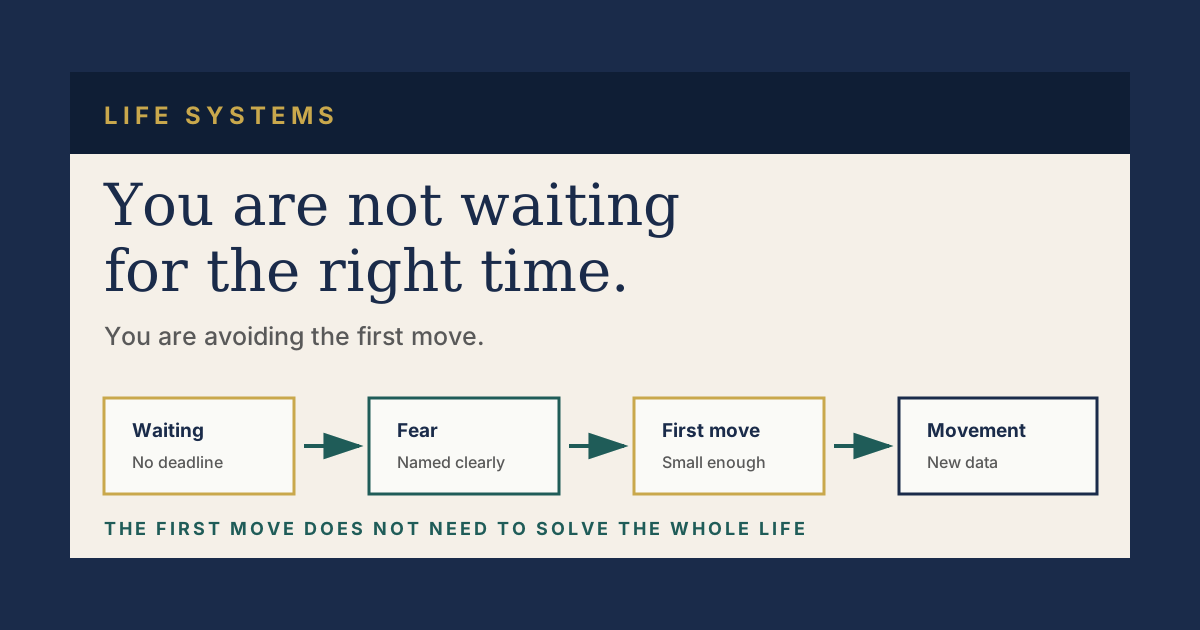
If you repeatedly redesign the plan instead of acting, read You Are Not Waiting for the Right Time. Planning can become a respectable way to avoid evidence.
When Procrastination Is a Decision Problem
Some tasks remain open because completing them would force a larger choice. Updating a CV may mean admitting you want to leave. Reviewing finances may force a business priority. Having a conversation may reveal whether a relationship can repair.
Name that decision separately. Use the hard-decision framework to identify criteria, trade-offs, reversibility, and the next evidence needed. Once the decision is bounded, the task often becomes smaller.
For Professionals and Founders in the UAE
High workloads, international responsibilities, relocation, and financial commitments can make a direction problem look like poor discipline. Do not assume the answer is to add more work to an already crowded week.
Map the priority, capacity, and decision first. Professionals and founders can explore online clarity coaching in the UAE when a stalled action is connected to a larger career or business choice.
How do I know if I am procrastinating or lack clarity?
If you can name the next action, understand why it matters, and have capacity but repeatedly avoid discomfort, procrastination is likely. If the outcome, priority, criteria, or next action is unclear, clarity is the first problem.
Can lack of clarity cause procrastination?
Yes. Vague outcomes and undefined decisions increase cognitive load because the brain must repeatedly interpret the task before acting.
What is the first step to stop procrastinating?
Define one observable next action that can be started in a short work block. If you cannot define it, clarify the outcome, decision, and missing information first.
Map the open loop before adding more pressure
Choose the free diagnostic closest to your situation, or use a Business Focus session when priorities and execution are tied to a difficult commercial decision.
Disclaimer: Persistent difficulty starting or completing tasks can have many causes. This article is educational and is not a clinical or mental-health assessment.