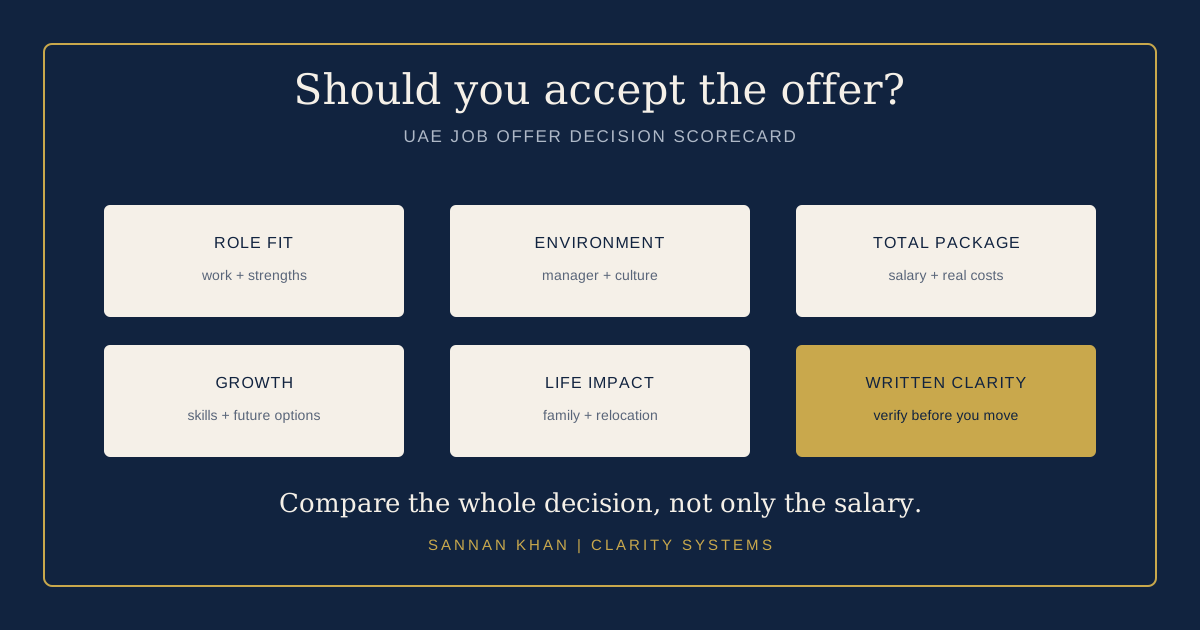
Before accepting a job offer in the UAE, verify that it is genuine and score the opportunity across six areas: role fit, manager and environment, complete financial package, growth, practical life impact, and written employment terms. A strong offer should improve more than your monthly salary. It should move your career and life in a direction you can responsibly sustain.
A job offer creates urgency. There may be an expiry date, a recruiter waiting for an answer, a current employer expecting notice, or a family decision attached to the move. That pressure encourages one-question thinking: "Is the salary good enough?"
Salary matters, but it cannot answer whether the work fits, whether the role is what you were promised, whether the manager can support your growth, or whether the move still works after housing, transport, schooling, insurance, travel, and family responsibilities are considered.
Should You Accept a Job Offer in the UAE?
Accept when the offer is genuine, the written terms are clear, the role uses or develops valuable strengths, the complete package works for your actual costs, and the opportunity supports a credible next stage of your career. Pause when the decision depends on verbal promises, pressure, an impressive title, or a headline salary that has not been translated into real life.
The question is not whether the offer is objectively good. The question is whether it is a responsible move for your direction, constraints, and priorities.
First, Verify the Offer and the Employer
Career fit matters only after the opportunity is real. For private-sector employment, the UAE government explains that the process includes a formal job offer, employment contract, work permit, and work visa. It also provides guidance for checking the authenticity of an offer.
Use the official MoHRE offer inquiry service and read the current UAE government employment process. If your employer or work arrangement falls under a different authority or jurisdiction, confirm the process that applies to your case.
Pause if you are asked to rely on an informal message, pay recruitment or visa fees without verified justification, begin work on the wrong visa, or accept material terms that are absent from the written offer. The UAE government's labour and visa fraud guidance is a useful official starting point.
Compare the Complete Package, Not Only the Salary
A higher salary can produce a weaker financial outcome when the package changes the costs you carry. Build a simple monthly and annual comparison using written numbers rather than assumptions.
- Basic salary and allowances: Identify what is basic salary and what is housing, transport, or another allowance.
- Variable compensation: Ask how bonuses or commissions are calculated, measured, and paid.
- Insurance and family coverage: Confirm who is covered, when coverage begins, and what remains your responsibility.
- Relocation and travel: Clarify flights, temporary accommodation, shipping, joining costs, and any repayment clauses.
- Time costs: Include working pattern, commute, travel, availability expectations, and the recovery the role will require.
- Family costs: Consider housing location, schooling, childcare, spouse employment, and travel to your home country where relevant.
Do not use a generic online number as your verdict. Your household, location, commitments, and savings goals determine whether the package works.
Clarify the Real Job Before Accepting the Title
Titles can travel badly across organizations. A strategy role may be mostly coordination. A leadership title may have no decision authority. A technical position may include sales, client management, or permanent operational support that was barely discussed during interviews.
Ask what you will be expected to deliver in the first 90 and 180 days, who controls priorities, which decisions you can make, how performance is measured, why the position is open, and what happened to the previous person. Request examples of a normal week and the problems the role is expected to solve.
If the answers remain vague, score the uncertainty itself. Do not fill an information gap with optimism.
Evaluate the Manager and Work Environment
A good role under the wrong operating environment can become expensive quickly. Your direct manager affects clarity, feedback, access, priorities, recognition, and whether reasonable mistakes become learning or punishment.
Look for evidence in the interview process. Were expectations consistent across interviewers? Did people answer difficult questions directly? Was the process organized? Could the manager explain what good performance looks like? Did the team describe the same culture the recruiter described?
No workplace is perfect. The aim is to identify whether the environment's normal pressures match the conditions under which you can do strong work.
Ask What This Offer Builds After the Salary Arrives
A job offer should be evaluated as a platform, not only a payment. Ask what professional capital you are likely to possess after two years:
- Will you solve more valuable problems?
- Will you gain credible ownership or only a better title?
- Will the role strengthen skills that remain useful across employers?
- Will you build relationships and evidence that improve future options?
- Does the organization have a believable growth path?
- Will the work move you closer to your intended direction or make the next decision harder?
An offer can be worth accepting for learning, access, responsibility, stability, or income. Be clear about which value you are choosing and what trade-off comes with it.
Consider Relocation and Family Impact as Part of the Career Decision
For someone moving to the UAE, the job and the relocation are linked but separate decisions. A credible role may still arrive at the wrong time. A manageable move for one person may be disruptive for a household.
Map what changes for your partner, children, parents, housing, support network, savings, health needs, and ability to return if the role does not work. Discuss assumptions openly instead of treating family impact as a detail to solve after acceptance.
If you are already in the UAE, compare the new commute, notice obligations, insurance transition, residency timing, probation risk, and any gap between roles using current official information and qualified advice where needed.
The UAE Job Offer Decision Scorecard
Score each area from 1 to 5. A score is not an automatic verdict. It makes your reasoning visible and shows which unanswered question could change the decision.
- Role fit: Does the actual work use your strengths and match the direction you want to build?
- Manager and environment: Can you perform well under the leadership, pace, culture, and working pattern?
- Total package: Does the written package work after realistic costs and responsibilities?
- Growth and professional capital: What skills, evidence, authority, and future options will the role build?
- Life and family impact: Is the move sustainable for the people and commitments affected?
- Verification and written clarity: Is the employer, offer, process, and material promise properly confirmed?
Then weight the categories. A person supporting a family may give financial stability and insurance more weight. A mid-career professional may prioritize scope and future positioning. A recent graduate may reasonably prioritize learning and credible experience.
The best offer is not automatically the one with the highest number. It is the one whose full trade-off you understand and are prepared to own.
Red Flags That Require a Pause
- Pressure to accept before material questions are answered.
- Important promises that will not be included in writing.
- A role description that changes between interviews and the offer.
- Unclear reporting lines, success measures, working hours, or location expectations.
- Requests for questionable recruitment, visa, or processing payments.
- A package that works only if every bonus, allowance, and optimistic assumption is achieved.
- A decision driven mainly by escaping your current job.
A red flag does not always mean decline immediately. It means stop, verify, ask for written clarification, and obtain appropriate professional advice before making the decision irreversible.
What to Do Before You Say Yes
- Write down what you believe the role, package, and working arrangement include.
- Compare that list with the written documents and mark every assumption.
- Ask focused questions about the role, manager, performance, growth, and practical terms.
- Verify the offer through the relevant official channel.
- Calculate the complete financial and family impact.
- Score the offer against your current role and one realistic alternative.
- Choose a decision date and make the decision from evidence, not repeated anxiety.
If the harder question is whether you need a different employer or a different career, use the UAE job-versus-career decision framework first.
What should I check before accepting a job offer in the UAE?
Check that the offer is genuine, compare the complete compensation package, clarify the actual role and success measures, assess growth and manager fit, calculate relocation and family impact, review the written employment terms, and compare the offer with your long-term career direction.
Is salary the most important part of a UAE job offer?
No. Salary matters, but the decision should also include the package structure, benefits, working pattern, role scope, manager, growth path, commute, family costs, relocation risk, and whether the work strengthens your future options.
How can I verify a UAE job offer?
Use the official MoHRE inquiry service and current UAE government guidance. Confirm the employer, offer reference, written terms, and authority applicable to your work arrangement before paying, resigning, or relocating.
Should I resign before the UAE employment process is confirmed?
Do not make an irreversible move from verbal promises alone. Confirm the written offer, applicable process, timing, financial runway, and professional advice needed for your circumstances before resigning or relocating.
How do I compare two UAE job offers?
Score both offers against the same criteria: role fit, manager and culture, total package, cost impact, growth, stability, practical constraints, and long-term direction. Weight the criteria by importance instead of choosing only the highest salary.
Make the decision with a clearer map
The free Career Direction Map helps you assess role fit, confidence, pressure, focus, and your next professional move before accepting a larger commitment.
Disclaimer: This article provides educational career decision support. It is not legal, immigration, recruitment, financial, or employment advice. Rules and individual circumstances can change. Verify current requirements with the relevant UAE authority and consult appropriately qualified professionals before acting.