Summary
Some businesses do not fail because the offer is bad.
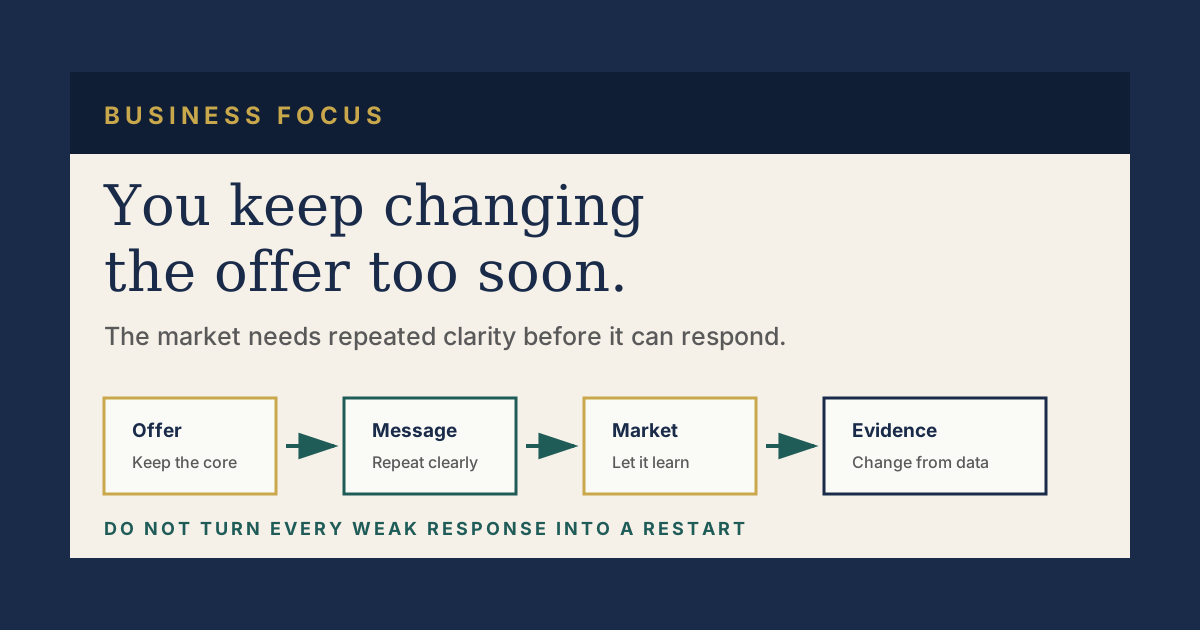
They struggle because the offer keeps changing before the market has time to understand it.
The founder launches something, gets a weak response, feels uncertain, changes the offer, adjusts the message, changes the price, adds a new package, rewrites the page, changes the audience, and starts again.
From the inside, this feels like improvement.
From the outside, it creates confusion.
The market cannot trust, remember, or respond to an offer that keeps moving.
Before you change the offer again, you need to ask a better question:
Has the offer failed, or have you not given it enough consistent exposure?
Key Takeaways
- A weak first response does not always mean the offer is wrong.
- Many founders change their offer too quickly because they are uncomfortable with slow feedback.
- The market needs repeated, clear exposure before it understands what you sell.
- Constant changes can weaken trust, recognition, and sales momentum.
- Iteration is useful, but changing everything too often creates business confusion.
- A good offer needs time, repetition, testing, and consistent messaging before you judge it.
Introduction
You launched the offer.
You posted about it.
You told a few people.
You added it to the website.
You waited.
The response was not what you expected.
Maybe nobody booked.
Maybe only a few people asked questions.
Maybe people liked the post but did not buy.
Maybe someone said it was interesting, but no one took action.
So you started changing things.
Maybe the title is wrong.
Maybe the price is too high.
Maybe the audience is different.
Maybe the package needs more features.
Maybe the website copy is weak.
Maybe I should create something new.
Before long, the offer is no longer the same offer.
The message has changed.
The audience has changed.
The promise has changed.
The structure has changed.
The business has changed direction again.
This is common.
But it is dangerous.
Because sometimes the problem is not that your offer failed.
The problem is that you changed it before the market had enough time to understand it.
The Market Needs Repetition
You may be tired of your offer because you have been thinking about it for weeks.
But the market may have barely noticed it.
You have seen the idea in your notes, drafts, website, planning documents, and conversations.
Your audience has maybe seen one post.
Maybe two.
Maybe they saw it once while scrolling quickly.
Maybe they did not understand it the first time.
Maybe they understood it but were not ready.
Maybe they need to see the problem named a few different ways before they recognize themselves.
This is why repetition matters.
Founders often get bored before the market gets clear.
They change the offer because it feels old to them.
But it is still new to the audience.
A clear offer needs repeated exposure.
Not once.
Not vaguely.
Not hidden inside general content.
Repeatedly, clearly, and consistently.
Changing Too Soon Creates Confusion
From the founder's side, constant adjustment feels smart.
You are improving.
You are testing.
You are responding to feedback.
You are staying flexible.
But from the audience's side, constant change can feel confusing.
Last week you were offering one thing.
This week it has a new name.
Next week it has a different price.
Then the audience changes.
Then the package changes.
Then the message changes again.
People may not say anything, but they quietly lose clarity.
They no longer know what you are known for.
They no longer know what problem you solve.
They no longer know whether the offer is stable.
They no longer know whether now is the right time to act.
A confused market does not always reject you loudly.
It simply waits.
And waiting often looks like silence.
The Difference Between Iteration and Instability
Iteration is good.
Instability is not.
Iteration means you are improving the offer based on real feedback, buyer behaviour, sales conversations, delivery experience, and clear patterns.
Instability means you are changing the offer because you feel anxious, bored, embarrassed, impatient, or unsure.
Iteration is evidence-based.
Instability is emotion-based.
Iteration sharpens the offer.
Instability keeps restarting the business.
Iteration keeps the core clear while improving the edges.
Instability changes the core so often that nothing becomes recognizable.
This distinction matters.
A business must adapt.
But it also needs enough consistency for the market to understand what is being adapted.
You cannot improve an offer properly if the offer never stays still long enough to be tested.
A Weak Response Is Not Always a Failed Offer
Many founders misunderstand weak response.
They post the offer once and expect immediate proof.
If no one buys, they think the offer is wrong.
But a weak response can mean many things.
Maybe the offer is unclear.
Maybe the audience is not familiar with the problem yet.
Maybe the call-to-action was weak.
Maybe the message did not reach enough people.
Maybe people need trust before buying.
Maybe the timing was not right.
Maybe the price needs context.
Maybe the offer is strong, but the explanation is poor.
Maybe the offer is good, but the market has not seen it enough times.
If you treat every weak response as proof that the offer is bad, you will keep abandoning things too early.
You will never know what could have worked with better clarity and consistency.
The Founder's Emotional Reaction
When an offer does not get immediate response, it can feel personal.
You may feel exposed.
You may feel embarrassed.
You may feel foolish for thinking people would want it.
You may feel pressure to prove the business is working.
You may feel tempted to change the offer quickly so the silence does not hurt as much.
This is understandable.
Selling exposes you to reality.
Reality can be uncomfortable.
But if every uncomfortable response leads to a new offer, your business will become controlled by emotional reaction.
The offer will not be shaped by strategy.
It will be shaped by anxiety.
That is not business focus.
That is emotional chasing.
The Offer Needs a Testing Window
Before changing the offer, give it a proper testing window.
A testing window is a defined period where the offer stays mostly stable while you gather real information.
For example:
Thirty days.
Six weeks.
Ninety days.
The length depends on the business, audience, price, and buying cycle.
During that window, you do not keep reinventing the offer every few days.
You keep the core stable.
You test the message.
You speak to real people.
You post consistently.
You answer objections.
You improve the explanation.
You collect questions.
You observe what people understand and what they miss.
Then you make decisions based on patterns, not panic.
Without a testing window, you may be changing the offer before it has had a fair chance.
What Should Stay Stable
When testing an offer, not everything should change at once.
Some things need to stay stable long enough for the market to recognize them.
1. The Audience
Who is this for?
If you keep changing the audience, your message will keep changing too.
One week you speak to founders.
Next week you speak to professionals.
Then students.
Then couples.
Then corporate teams.
The market cannot locate itself if your audience keeps moving.
2. The Problem
What problem does the offer solve?
This needs to be clear and repeated.
If the problem changes every few days, people cannot connect your offer with a specific need.
3. The Outcome
What result does the buyer get?
The outcome does not need to be exaggerated.
But it should be stable.
People need to know what changes after working with you.
4. The Next Step
What should the person do?
Book a session.
Send a message.
Fill a form.
Buy directly.
Join a waitlist.
If the next step keeps changing, buyers hesitate.
A stable offer does not mean nothing improves.
It means the core stays clear while the message becomes sharper.
What You Can Improve During Testing
Stability does not mean you ignore learning.
During the testing window, you can improve many things.
You can improve the headline.
You can make the problem clearer.
You can add examples.
You can answer common objections.
You can clarify who the offer is not for.
You can improve the call-to-action.
You can create better supporting content.
You can simplify the package.
You can explain the process more clearly.
You can adjust the sales page based on real questions.
But do not change everything at once.
If you change the audience, price, title, outcome, format, and message all together, you will not know what actually made the difference.
Good testing isolates learning.
Panic changes everything and teaches nothing.
The Market Needs to Associate You With a Problem
Strong businesses become associated with specific problems.
When someone thinks of that problem, they think of you.
That does not happen in one post.
It happens through repetition.
If you talk about one problem consistently, people begin to remember.
If your offer connects to that problem consistently, people begin to understand.
If your content keeps diagnosing that problem from different angles, people begin to trust your thinking.
But if you change the problem too often, the market never forms the association.
You become interesting, but not memorable.
Visible, but not known for anything specific.
Active, but not positioned.
Positioning requires repetition.
Repetition requires patience.
Patience requires confidence in the testing process.
Why Founders Get Bored Too Early
Founders often get bored with their own message before the audience has absorbed it.
You may think:
"I already said this."
"I need a new angle."
"People will get tired of hearing the same thing."
"This is too repetitive."
But your audience is not living inside your business the way you are.
They do not read every post.
They do not remember every detail.
They do not understand your offer as deeply as you do.
Repetition is not laziness.
Repetition is how clarity spreads.
You do not need to say the same sentence every day.
But you do need to return to the same core problem, promise, and offer enough times for people to connect the dots.
Newness is not always the answer.
Sometimes depth is.
The Offer Clarity Loop
If your offer is not converting, do not immediately create a new one.
First, run the offer clarity loop.
1. State the Offer Clearly
Can you explain the offer in one simple sentence?
If you cannot explain it simply, the market probably cannot repeat it.
2. Name the Problem Repeatedly
Are you consistently naming the exact problem this offer solves?
Or are you speaking around it vaguely?
3. Show the Cost of the Problem
Does your audience understand why the problem matters?
People do not buy only because a solution exists.
They buy when the problem feels important enough to address.
4. Explain the Outcome
What changes after the buyer works with you?
If the outcome is unclear, the decision feels risky.
5. Invite Action
Are you clearly asking people to book, buy, inquire, or take the next step?
Many founders educate constantly but invite action weakly.
Run this loop before deciding the offer is dead.
Stop Adding More Features to Fix Unclear Value
When an offer is not selling, founders often add more.
More sessions.
More calls.
More templates.
More bonuses.
More access.
More deliverables.
More support.
They believe the offer will become more attractive if it includes more things.
But more features do not always create more value.
Sometimes they create more confusion.
The buyer may not need more pieces.
They need a clearer reason to care.
If the core problem and outcome are unclear, adding more deliverables will not fix the issue.
A confused offer with more features is still a confused offer.
Before adding more, clarify the main value.
What problem does this solve?
Why now?
Why this structure?
Why should the buyer trust this?
What outcome matters most?
That is where the work begins.
Do Not Use Price as the First Explanation
When people do not buy, many founders blame the price first.
"It is too expensive."
"My audience cannot afford it."
"I should lower the price."
Maybe the price is an issue.
But price is not always the real problem.
Sometimes people do not buy because they do not understand the value.
Sometimes the problem does not feel urgent.
Sometimes the outcome is unclear.
Sometimes trust is not strong enough.
Sometimes the offer is not positioned well.
Sometimes the next step feels uncertain.
If you lower the price without fixing clarity, you may simply create a cheaper unclear offer.
That does not build a stronger business.
Before changing the price, check whether the buyer understands the problem, outcome, process, and reason to act.
The Danger of Reinventing the Business Every Month
Some founders do not run a business.
They run a series of restarts.
Every month has a new idea.
A new offer.
A new audience.
A new strategy.
A new platform.
A new funnel.
A new direction.
This creates emotional excitement.
It feels like movement.
But the business never compounds.
Content does not compound because the topic keeps changing.
Trust does not compound because the offer keeps moving.
Sales conversations do not compound because learning is scattered.
Positioning does not compound because the market never hears the same signal long enough.
Growth needs compounding.
Compounding requires staying with the right thing long enough for it to build weight.
When You Should Actually Change the Offer
Sometimes the offer does need to change.
You should consider changing it when you have real evidence.
For example:
You have explained it clearly many times and the right audience still does not understand it.
You have spoken to potential buyers and they consistently do not see the value.
People want a different outcome than the one you are offering.
The problem is not urgent enough.
The delivery model is too difficult.
The offer attracts the wrong clients.
The price does not match the market, value, or trust level.
You have tested the offer consistently and the same issues keep appearing.
That is useful evidence.
But changing because of evidence is different from changing because of discomfort.
One is strategy.
The other is avoidance.
The Thirty-Day Offer Stability Test
If you are unsure whether to keep or change your offer, run a thirty-day stability test.
For thirty days, keep the core offer the same.
Same audience.
Same main problem.
Same main outcome.
Same call-to-action.
During those thirty days, create content around the problem from different angles.
Explain the pain.
Explain the mistake people make.
Explain the cost of delay.
Explain what the offer helps with.
Share examples.
Answer objections.
Invite people to take the next step.
Track what happens.
What questions do people ask?
What part do they misunderstand?
What content creates recognition?
What objections repeat?
Who responds?
Who does not?
At the end of thirty days, you will have better information than you had after one emotional launch post.
What to Measure Before Changing
Before changing the offer, look at the right signals.
Do not only ask, "Did people buy?"
Ask:
Did enough people see the offer?
Did the right people see it?
Did they understand who it was for?
Did they understand the problem?
Did they understand the outcome?
Did they know what to do next?
Did I invite action clearly?
Did I talk to actual potential buyers?
Did I repeat the message enough times?
Did I collect objections?
Did I improve the explanation before changing the offer?
If the answer is no, you may not have a failed offer.
You may have an under-tested offer.
The Founder Needs Emotional Discipline
Business focus is not only about tasks.
It is also about emotional discipline.
Can you stay with an offer long enough to learn from it?
Can you tolerate slow feedback without panicking?
Can you repeat the same message without feeling boring?
Can you hear silence without immediately rewriting everything?
Can you improve the offer without abandoning it?
Can you separate real market data from your own anxiety?
This is hard.
But it matters.
A founder who changes direction every time discomfort appears will struggle to build momentum.
The market needs consistency.
The founder needs patience.
The offer needs enough time to become clear.
Final Thought
Before you change the offer again, pause.
Maybe the offer is wrong.
But maybe it is simply under-explained.
Under-repeated.
Under-tested.
Under-positioned.
Maybe the market has not rejected it.
Maybe the market has not understood it yet.
A business does not grow only because the founder has a new idea.
It grows when the right idea is made clear enough, repeated enough, tested enough, and trusted enough.
Changing too soon can feel productive.
But sometimes it prevents the very clarity you are trying to create.
So do not judge an offer only by one weak response.
Give it structure.
Give it a testing window.
Give the market repeated clarity.
Improve the message.
Listen to objections.
Watch the pattern.
Then decide.
Not from panic.
From evidence.
Because the market cannot understand an offer that keeps moving.
And your business cannot build momentum if every moment of uncertainty becomes a restart.
Need Business Focus?
If your business keeps changing offers, audiences, prices, or direction before anything has time to work, the problem may not be creativity.
It may be lack of focus.
A structured Business Focus session can help you clarify what offer deserves testing, what message needs repetition, and what changes should wait until you have real evidence.
You do not need another restart.
You need a clearer testing system.
Book a Business Opportunity Focus Session
If your business keeps changing offers, audiences, prices, or direction before anything has time to work, a Business Opportunity Focus session can help you choose what deserves testing and what should wait.