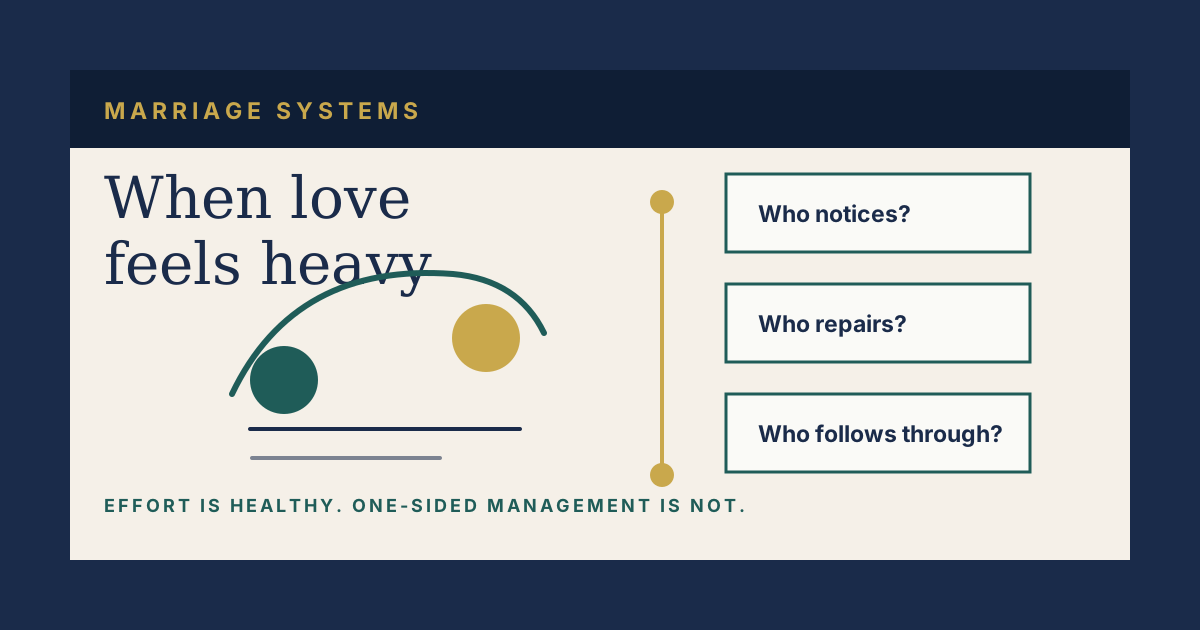
A healthy relationship is built on shared responsibility, emotional safety, honest communication, repair after conflict, and reliable follow-through. It is not measured by how rarely two people disagree, but by how they handle what goes wrong.
Healthy does not mean effortless
Every long-term relationship has pressure: work, money, family expectations, health, distance, disappointment, and changing needs. The question is not whether those pressures exist. The question is whether both people can face them without one person becoming the manager, translator, and repairer of the entire relationship.
The five conditions of a healthy relationship
- Shared ownership. Both people notice problems, initiate difficult conversations, and take responsibility for their part.
- Emotional safety. Honesty does not lead to humiliation, threats, punishment, or prolonged retaliation.
- Reliable repair. Conflict is followed by accountability, changed behaviour, and a return to connection.
- Boundaries that are respected. Time, privacy, family involvement, money, and personal limits are discussed rather than ignored.
- Follow-through. Promises become visible action. Apologies without change do not rebuild trust.
Love becomes sustainable when responsibility is shared, not when one person becomes better at carrying everything.
How to tell a hard season from an unhealthy pattern
A hard season affects both people, but both still show willingness. They may be tired or imperfect, yet they return to the problem and try to repair it. An unhealthy pattern leaves one person repeatedly asking for basic attention, respect, truth, or effort while the other avoids responsibility.
Communication is more than talking
Good communication is not constant discussion. It is the ability to name a problem accurately, listen without turning everything into a defence, agree on an action, and revisit whether that action happened. Read what to do when every conversation becomes a fight if discussions have become reactive.
What to do next
Choose one recurring pattern and make it observable. Instead of saying “you do not care,” name the specific missed agreement, request, or repair. Then watch whether responsibility becomes shared over time. The Relationship Readiness Map can help you reflect on the pattern before choosing your next conversation.
What are the signs of a healthy relationship?
Common signs include mutual respect, emotional safety, shared effort, honest communication, boundaries, repair after conflict, and consistent follow-through.
Can a relationship be healthy if we argue?
Yes. Conflict is normal. The key question is whether both partners can speak honestly, repair harm, and change the pattern rather than repeating the same injury.
What if I am the only person trying to repair the relationship?
That is an imbalance worth taking seriously. A relationship can survive a hard season, but it cannot remain healthy when one person carries all responsibility indefinitely.
Disclaimer: This article is educational and reflective. It is not therapy, clinical counselling, legal, medical, financial, or religious advice. If there is abuse, coercion, self-harm, or immediate danger, contact the appropriate qualified or emergency support.
Get clarity on the relationship pattern
A Marriage Clarity Session helps you map the responsibility, communication, and decision pattern without reducing a complex relationship to one argument.