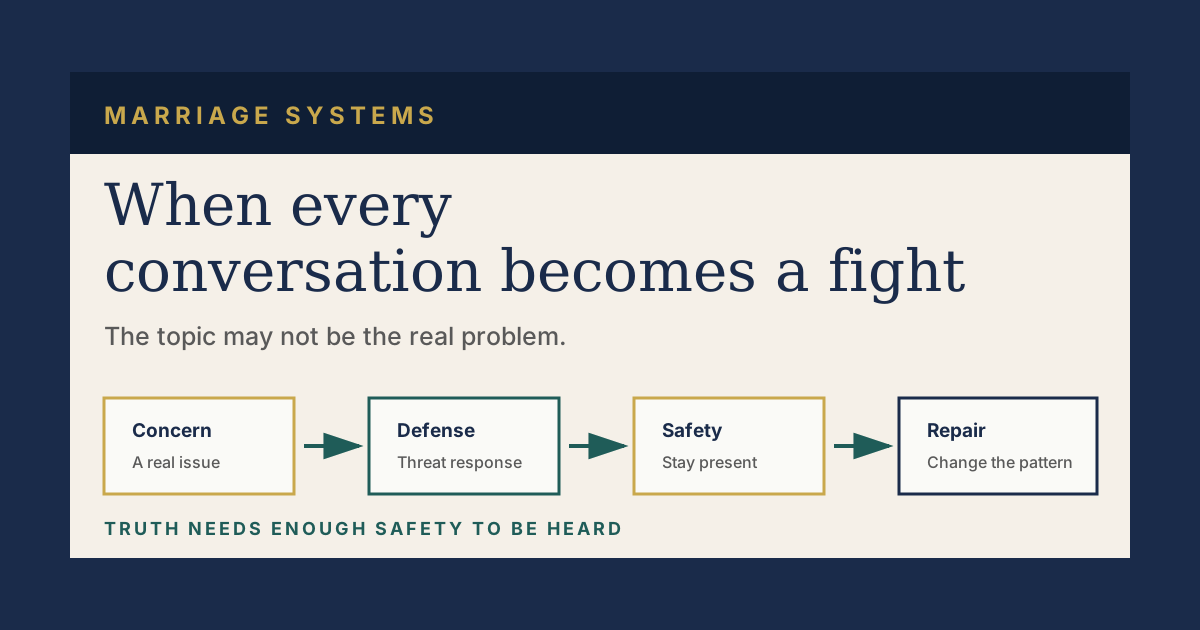
Relationship problems become clearer when you separate the visible event from the repeating pattern underneath it. Conflict, distance, resentment, trust issues, and unequal effort usually need a diagnosis of responsibility, safety, expectations, and repair before they can improve.
Do not solve only the latest incident
A missed call, an argument, a broken promise, or a cold week may be the trigger. But the trigger is not always the problem. If the same type of pain keeps returning, the relationship has a pattern that needs to be named.
Common patterns underneath relationship problems
- Unclear expectations: both people feel disappointed by agreements that were never clearly made.
- Unequal responsibility: one person notices, initiates, repairs, and plans while the other waits.
- Communication breakdown: difficult conversations turn into defensiveness, silence, or fighting.
- Trust damage: secrecy, broken agreements, and apologies without changed behaviour make safety weaker over time.
- Boundary pressure: family, work, money, privacy, or outside relationships enter the partnership without clear limits.
A relationship problem is not only what happened. It is the system that keeps making the same outcome likely.
Use the pattern map
- What keeps happening?
- What usually triggers it?
- How does each person respond?
- What is never repaired?
- What would shared responsibility look like?
This map makes the problem concrete enough to discuss. It also reveals when you are carrying all the emotional management yourself. When Love Feels Heavy explores that imbalance in more detail.
When a problem becomes a safety issue
If there is coercion, violence, intimidation, stalking, financial control, or fear of retaliation, prioritize safety and contact qualified local support. Do not use a relationship article or joint coaching session as a replacement for safety planning.
Choose one next repair
When there is no immediate safety risk, choose one pattern and one observable agreement. You may need a boundary, a Time-Out and Return rule, a financial conversation, or a commitment to follow through. Start with the Relationship Readiness Map if you need a private view of the pattern before choosing the next conversation.
What are common relationship problems?
Common problems include poor communication, unequal effort, unclear expectations, trust damage, boundary pressure, emotional distance, and conflict that does not lead to repair.
How do I fix recurring relationship problems?
Identify the repeating pattern, make the responsibility visible, agree on one concrete change, and review whether the change actually happened.
When should I seek help for relationship problems?
Seek qualified help when safety is at risk, conflict is repeated, communication has broken down, trust is damaged, or a major decision cannot move forward.
Disclaimer: This article is educational and reflective. It is not therapy, clinical counselling, legal, medical, financial, or religious advice. If there is abuse, coercion, self-harm, or immediate danger, contact the appropriate qualified or emergency support.
Get clarity on the relationship pattern
A Marriage Clarity Session helps you map what is repeating, what needs ownership, and what next step is appropriate.