Summary
Many capable people stay stuck because they are waiting to be chosen.
They wait for a manager to notice their effort.
They wait for someone to offer the opportunity.
They wait for permission to speak up.
They wait for the perfect job opening.
They wait for someone to tell them they are ready.
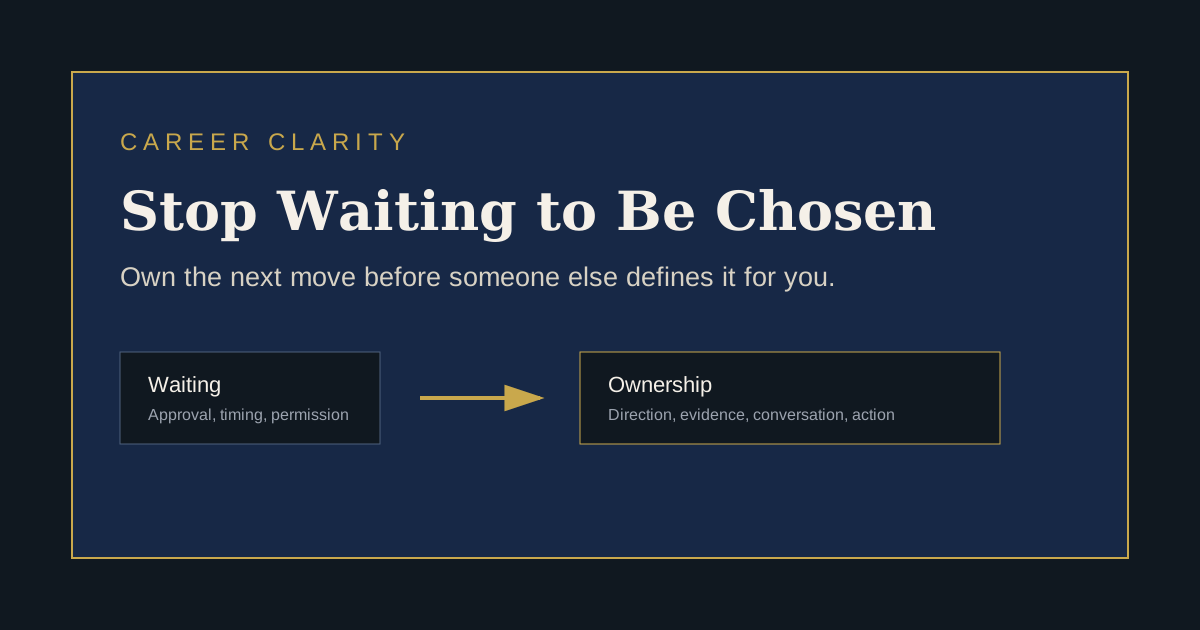
They wait for recognition before they take ownership of their direction.
But careers rarely move forward only because someone finally sees you.
At some point, you have to stop waiting to be selected and start making your next move visible, intentional, and owned.
This does not mean forcing your way forward.
It means no longer handing your future entirely to someone else's timing, attention, or approval.
Key Takeaways
- Many people are not stuck because they lack ability. They are stuck because they are waiting to be noticed.
- Good work does not always automatically become opportunity.
- Your career needs ownership, not only effort.
- Waiting to be chosen can feel humble, but it can also become passive.
- Visibility is not arrogance when it is connected to value.
- Career movement often begins when you stop waiting for permission and start creating evidence, conversations, and direction.
Introduction
You are doing the work.
You show up.
You try hard.
You stay responsible.
You support the team.
You meet expectations.
You solve problems quietly.
You hope someone notices.
Maybe your manager will see your effort.
Maybe the company will recognize your value.
Maybe the right opportunity will appear.
Maybe someone will recommend you.
Maybe someone will finally say, "You are ready."
So you keep waiting.
You wait for the promotion.
The invitation.
The approval.
The opening.
The confidence.
The sign.
The moment when someone else chooses you.
But the longer you wait, the more frustrated you become.
Not because you have no ability.
Because your career is depending too much on being discovered.
This is one of the quiet ways capable people stay stuck.
They keep doing good work, but they do not own the next move.
Good Work Is Not Always Enough
Good work matters.
You should build skill.
You should be reliable.
You should deliver.
You should become someone people can trust.
But good work alone does not always create career movement.
Some people do excellent work and remain invisible.
Some people carry responsibility but never receive recognition.
Some people are dependable, but not promoted.
Some people become useful in their current position, so the organization keeps them there.
Some people wait for someone else to connect their effort to a bigger opportunity.
That connection does not always happen automatically.
A career is not moved only by effort.
It is moved by effort, visibility, direction, timing, relationships, positioning, and ownership.
If you only work hard but never make your direction clear, people may value your contribution without understanding where you want to go.
The Hidden Belief Behind Waiting
Waiting to be chosen often comes from a hidden belief:
"If I am good enough, someone will notice."
That belief is understandable.
Many people were taught that if they work hard, stay humble, and do their job well, opportunity will come.
Sometimes it does.
But often, the workplace does not operate that cleanly.
Managers are busy.
Companies have politics.
People promote what they can see.
Opportunities go to those who are remembered.
Decision-makers may not know what you want.
Your strongest work may happen quietly, behind the scenes.
If you wait for the system to understand you perfectly, you may wait too long.
This does not mean the system is always unfair.
It means you must participate in shaping your career story.
Waiting Can Feel Like Humility
Many people avoid speaking about their career goals because they do not want to seem arrogant.
They do not want to ask for too much.
They do not want to look impatient.
They do not want to appear ungrateful.
They do not want to promote themselves.
They tell themselves, "I will let the work speak for itself."
There is wisdom in humility.
But silence is not always humility.
Sometimes silence is fear.
Fear of rejection.
Fear of being judged.
Fear of being told no.
Fear of discovering that the opportunity is not available.
Fear of being seen as ambitious.
Fear of having to take responsibility for the next step.
You do not need to become loud or entitled.
But you do need to stop confusing invisibility with humility.
Your career cannot move toward a direction you never name.
The Difference Between Being Patient and Being Passive
Patience can be wise.
Some career moves take time.
You may need to build skill.
Gain experience.
Understand the organization.
Strengthen your evidence.
Prepare financially.
Wait for the right opening.
But patience has movement inside it.
Passive waiting does not.
Patience says, "I am preparing while the right opportunity develops."
Passivity says, "I hope someone eventually chooses me."
Patience builds evidence.
Passivity builds resentment.
Patience has conversations.
Passivity stays quiet.
Patience studies the next step.
Passivity waits for clarity to arrive from outside.
This distinction matters.
You may think you are being patient, but if nothing is being prepared, expressed, tested, or clarified, you may actually be passive.
Signs You Are Waiting to Be Chosen
You may be waiting to be chosen if you keep hoping someone will notice your effort without ever naming your goals.
You may be waiting to be chosen if you feel resentful that others get opportunities, but you have not clearly asked for what you want.
You may be waiting to be chosen if you keep doing extra work without connecting it to a career conversation.
You may be waiting to be chosen if you assume your manager knows you want growth.
You may be waiting to be chosen if you avoid applying for roles until you feel perfectly qualified.
You may be waiting to be chosen if you need someone else to confirm you are ready before you move.
You may be waiting to be chosen if your career plan depends mostly on other people recognizing you.
The clearest sign is this:
You are working hard, but your next move has no owner.
That owner has to become you.
The Problem With Being Quietly Reliable
Being reliable is a strength.
But being quietly reliable can become a trap.
You become the person everyone depends on.
You fix things.
You cover gaps.
You support others.
You keep the system running.
People appreciate you.
But they may not move you.
Why?
Because you have become valuable where you are.
If you are excellent at holding the current system together, the organization may have no urgency to reposition you.
This is not always malicious.
It is practical.
If you do not name your growth direction, people may simply keep using you where you are most useful to them.
That is why reliability needs direction.
Otherwise, your strength can become your cage.
Effort Without Direction Creates Frustration
Many people work harder when they feel stuck.
They take on more.
They say yes.
They stay late.
They prove themselves.
They become more available.
They hope the extra effort will become a signal.
But if effort is not connected to a clear direction, it can create frustration.
You may become busier without becoming closer to your next move.
You may become more useful without becoming more visible.
You may become more trusted without becoming more developed.
You may become more exhausted without becoming more promoted.
Hard work should not be random.
It should be attached to a career direction.
Before doing more, ask:
What am I trying to make visible?
What skill am I trying to prove?
What role am I moving toward?
What conversation should this effort support?
If you cannot answer, more effort may not be the answer.
More clarity may be.
Your Manager May Not Know What You Want
Many people assume their manager knows they want growth.
They assume their ambition is obvious.
They assume their frustration is visible.
They assume their readiness is clear.
But managers are not mind readers.
They may see you as dependable, but not know you want leadership.
They may see you as skilled, but not know you want a different role.
They may see you as satisfied because you rarely complain.
They may assume you are comfortable because you keep performing.
This is why career conversations matter.
You do not need to demand a promotion aggressively.
But you do need to communicate direction.
For example:
"I would like to grow toward more strategic responsibility."
"I want to understand what would make me ready for the next level."
"I am interested in taking on work that develops this skill."
"I want to discuss what a growth path could look like here."
These conversations make your direction visible.
Visibility Is Not Arrogance
Visibility means making your contribution understandable.
It does not mean bragging.
It does not mean exaggerating.
It does not mean performing confidence you do not have.
Visibility means people can see what you are doing, why it matters, and where you are growing.
If you solve a problem, communicate the result.
If you complete a project, summarize the impact.
If you take on responsibility, connect it to the skill being developed.
If you want growth, name it respectfully.
If you want a new direction, explain the connection.
People cannot advocate for what they cannot see.
Visibility is not vanity.
It is career clarity made external.
The Career Ownership Shift
Career ownership begins when you stop asking only:
"Will they choose me?"
And start asking:
"What can I make clear?"
What value do I bring?
What direction do I want?
What evidence do I need?
What conversations should I have?
What skills should I build?
What opportunities should I pursue?
What story should my work be telling?
This shift does not guarantee immediate results.
But it changes your position.
You are no longer waiting passively.
You are participating in the direction of your career.
That participation matters.
Because even if the current workplace cannot offer the opportunity, you will still gain clarity about what to do next.
Stop Waiting Until You Feel Fully Ready
Many people wait to apply, ask, speak, or move until they feel fully ready.
But readiness is often built through movement.
You may not feel ready before the interview.
You may become clearer by preparing for it.
You may not feel ready for leadership before taking on a small leadership responsibility.
You may build confidence through the responsibility itself.
You may not feel ready to change roles until you start speaking to people in that field.
Readiness does not always arrive before action.
Sometimes action creates readiness.
This does not mean you should be reckless.
It means you should stop demanding perfect confidence before taking reasonable steps.
If you wait until fear disappears, you may wait too long.
The Permission Trap
Some people are waiting for permission.
Permission to apply.
Permission to ask for more.
Permission to change direction.
Permission to leave.
Permission to take themselves seriously.
Permission to stop being the helpful person and become the growing person.
Permission can feel comforting.
But a mature career cannot depend entirely on permission.
You may never get the exact approval you want.
Some people will think you should wait.
Some will think you are not ready.
Some will benefit from you staying where you are.
Some will only support the move after it works.
At some point, you must decide whether your direction is real enough to act on before everyone approves.
That is ownership.
Create Evidence Before You Ask
Ownership does not mean asking without preparation.
If you want growth, create evidence.
If you want promotion, show readiness.
If you want a new role, build relevant examples.
If you want to change fields, create transferable proof.
If you want leadership, take responsibility in a visible way.
If you want more strategic work, demonstrate strategic thinking.
Evidence makes the conversation stronger.
Instead of saying, "I think I am ready," you can say:
"These are the responsibilities I have handled."
"These are the results I have contributed to."
"This is the direction I want to grow in."
"These are the skills I am actively developing."
"This is the kind of opportunity I would like to work toward."
That is a different conversation.
It is not entitlement.
It is prepared ownership.
Make the Invisible Work Visible
A lot of valuable work is invisible.
Emotional labor.
Coordination.
Preventing mistakes.
Clarifying confusion.
Supporting team members.
Smoothing client communication.
Catching details before they become problems.
Helping others execute.
If this work remains invisible, it may be appreciated privately but ignored professionally.
You need to translate invisible work into visible value.
For example:
Instead of saying, "I help the team," say:
"I help reduce confusion by keeping communication clear and making sure project details do not fall through the cracks."
Instead of saying, "I handle clients," say:
"I manage client communication so expectations are clear, issues are addressed early, and trust is maintained."
Instead of saying, "I support operations," say:
"I help the work move more smoothly by organizing information, tracking tasks, and removing small delays."
This is not exaggeration.
It is translation.
Do Not Let Rejection Become Identity
When you start owning your next move, you may hear no.
You may not get the promotion immediately.
You may not get the job.
You may not get the opportunity.
You may not receive the response you wanted.
That does not mean you were wrong to ask.
It means you received data.
Maybe you need more evidence.
Maybe the timing is wrong.
Maybe the organization has no path.
Maybe the role is not available.
Maybe your value was not clear enough.
Maybe the decision-maker does not see your potential.
Rejection is information.
It is not identity.
Do not let one no send you back into silent waiting for another year.
Use it.
Ask what is missing.
Clarify the gap.
Decide whether to build inside the current place or move elsewhere.
That is career ownership.
The Promotion Conversation
If you want a promotion, do not wait until review season and hope.
Prepare the conversation.
Ask:
"What would make me ready for the next level?"
"What expectations would I need to meet?"
"What skills or results would make the case stronger?"
"What responsibilities can I take on to develop toward that role?"
"When can we review progress?"
This turns promotion from a vague hope into a structured path.
Maybe the answer will be encouraging.
Maybe it will reveal that no path exists.
Both are useful.
Clarity is better than waiting in silence.
A vague hope can keep you stuck.
A direct conversation can show you what is possible.
The Career Change Conversation
If you want to change direction, ownership looks different.
You may need to speak to people in the field.
Study the work.
Understand the skill gaps.
Create small projects.
Rewrite your career story.
Build transferable evidence.
Apply before you feel perfectly ready.
Ask for feedback.
Test the path.
Do not wait for someone to discover your potential in a field you have not entered.
You need to create signals.
A career change does not begin when someone finally gives you a chance.
It often begins when you create enough evidence that giving you a chance makes sense.
The Ownership Audit
Use this audit to see where you are waiting.
Ask:
What career move am I hoping someone else will initiate?
What conversation am I avoiding?
What value have I not explained clearly?
What opportunity do I want but have not named?
What evidence do I need to create?
What skill gap do I need to close?
What role or direction am I curious about but not exploring?
Where am I using patience as a cover for passivity?
Who needs to know what I want?
What is one move I can own this week?
These questions shift you from waiting to action.
Not reckless action.
Responsible movement.
You Are Allowed to Want Growth
Some people feel guilty for wanting more.
They think wanting growth means they are ungrateful.
But growth does not cancel gratitude.
You can appreciate where you are and still want to develop.
You can respect your current role and still know it is not your final place.
You can be loyal and still be honest about your future.
You can serve well and still prepare for your next step.
Wanting growth is not betrayal.
It is part of being alive.
The question is not whether you are allowed to want more.
The question is whether you are willing to own what wanting more requires.
The First Move
You do not need to transform your entire career today.
You need one owned move.
Send the email.
Ask for the meeting.
Update the CV.
Rewrite the LinkedIn summary.
Apply for the role.
Start the project.
Speak to the person.
Name the direction.
Ask what readiness requires.
Document your results.
Build one piece of evidence.
Choose the next skill.
A career does not move only through dramatic decisions.
It often moves through small owned actions repeated with clarity.
The first move matters because it breaks the waiting pattern.
It tells your career:
"I am not only hoping to be chosen. I am participating now."
Final Thought
You may not be stuck because you lack ability.
You may be stuck because you keep waiting for someone else to choose you.
Waiting to be noticed.
Waiting to be promoted.
Waiting to be approved.
Waiting to be invited.
Waiting to be told you are ready.
Waiting for the perfect opportunity to appear.
But your career cannot depend entirely on someone else's attention.
Good work matters.
But good work needs direction.
Reliability matters.
But reliability needs visibility.
Patience matters.
But patience needs movement.
Humility matters.
But humility should not become invisibility.
At some point, you must become an active participant in your own career.
Name what you want.
Explain your value.
Create evidence.
Have the conversation.
Apply before you feel perfect.
Ask what readiness requires.
Decide whether the current place can support your growth.
And if it cannot, begin preparing for the next move with responsibility.
You do not need to force every door open.
But you do need to stop standing outside your own future, waiting to be invited in.
Need Career Clarity?
If you feel stuck waiting to be noticed, promoted, or chosen, the problem may not be your ability.
It may be lack of career ownership, visibility, or direction.
A structured Career Clarity session can help you understand what value you bring, what next move makes sense, and how to stop waiting passively for someone else to define your path.
You do not need to become louder.
You need to become clearer.
Need Career Clarity?
If you feel stuck waiting to be noticed, promoted, or chosen, the problem may not be your ability.
It may be lack of career ownership, visibility, or direction.
A structured Career Clarity session can help you understand what value you bring, what next move makes sense, and how to stop waiting passively for someone else to define your path.
You do not need to become louder.
You need to become clearer.
Book a Career Direction Clarity Session
If your next move feels blocked because your direction, value, or visibility is unclear, a Career Direction Clarity session can help you map the next responsible step.