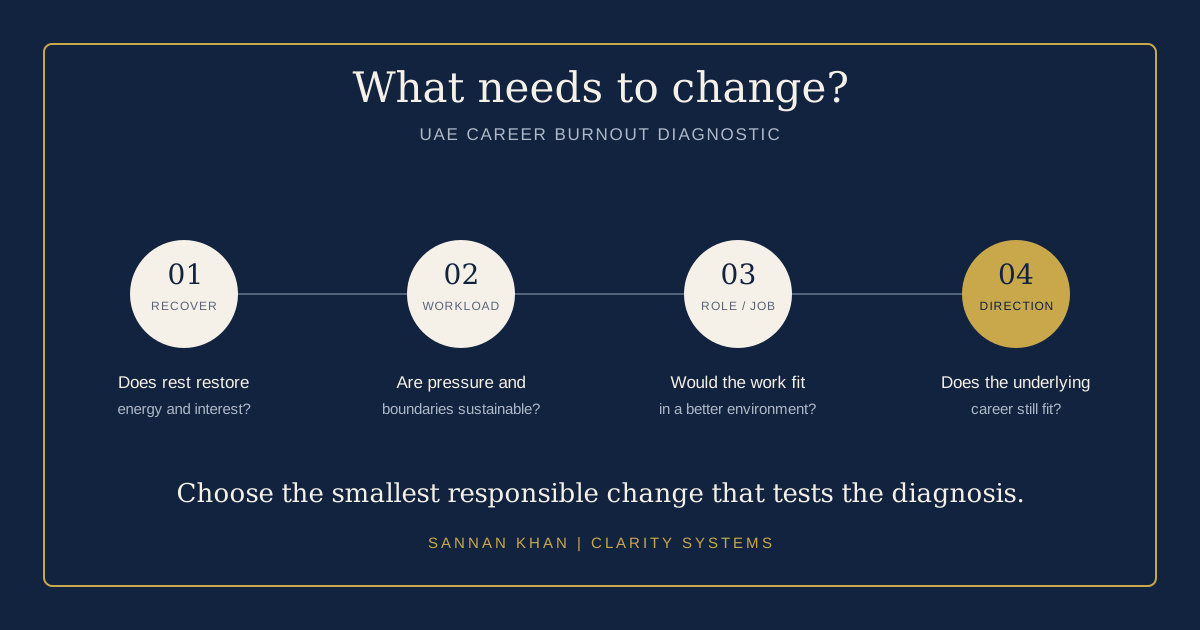
If you feel burned out in your UAE career, do not assume that resignation or a complete career change is automatically the answer. First separate four possible problems: insufficient recovery, unsustainable workload or boundaries, a mismatch with the employer or role, and a deeper mismatch with the career direction itself. The smallest change that addresses the real cause is usually safer than an exhausted escape.
Burnout can make every part of work look wrong. A difficult commute feels like proof that the whole career is failing. A demanding manager makes another industry look automatically better. A week of leave may produce temporary relief, followed by the same heaviness on the first morning back.
For professionals in Dubai, Abu Dhabi, Sharjah, and across the UAE, the decision can carry more than professional consequences. Income, residency planning, housing, savings, family responsibilities, school costs, remittances, and the expectations attached to working abroad can all make it difficult to tell whether staying is responsible or whether fear is delaying a necessary change.
What Is Career Burnout?
The World Health Organization describes burnout as an occupational phenomenon associated with chronic workplace stress that has not been successfully managed. Its dimensions include exhaustion, increased mental distance or cynicism toward work, and reduced professional effectiveness. The WHO also distinguishes burnout from a medical condition and limits the term to the occupational context.
That distinction matters. Read the WHO explanation of occupational burnout and the Emirates Health Services guidance on job burnout rather than diagnosing yourself from a short checklist.
Career clarity can help organize a decision. It cannot diagnose or treat depression, anxiety, sleep disorders, physical illness, trauma, or another health condition that may resemble or intensify exhaustion. Persistent or serious symptoms deserve assessment by an appropriately qualified health professional.
Why UAE Career Burnout Can Be Difficult to Read Accurately
Work pressure is only one part of the situation. A professional may also be carrying a financial target, supporting family in more than one country, building a long-term residency plan, adapting to a different culture, or trying to justify the sacrifices involved in relocating.
These pressures can produce two opposite mistakes:
- Leaving too quickly: exhaustion is treated as proof that the whole career is wrong.
- Staying too long: every warning sign is dismissed because the salary, visa, title, or family expectation feels impossible to disturb.
The purpose of diagnosis is not to encourage staying or leaving. It is to identify which layer is generating the signal before you make a decision with lasting consequences.
The Four-Layer UAE Career Burnout Diagnostic
Move through these layers in order. Do not jump directly from exhaustion to a permanent career conclusion.
Layer 1: Recovery
Ask whether your system has had a genuine chance to recover. One quiet weekend may not be enough after months of sustained pressure. Look at sleep, leave, illness, travel, caregiving, constant availability, and whether your time away from work is actually protected.
Recovery is the likely first issue when rest produces a noticeable return of energy, patience, concentration, and interest. It does not prove that the job is healthy, but it gives you a more reliable condition from which to evaluate it.
Layer 2: Workload and Boundaries
Sometimes the field and role still fit, but the operating system around them does not. The workload may be permanently larger than the available time. Priorities may change daily. You may be carrying work that should belong to several people, responding after hours, or functioning without enough control, support, or recovery.
Ask what would happen if workload, staffing, priorities, working pattern, commute, or availability expectations changed. If the work would become sustainable under healthier conditions, the first intervention may be a boundary, workload, or management conversation rather than a career change.
Layer 3: Employer or Role Fit
You may still value the profession but be in the wrong seat. A strong technical specialist can burn out in a role dominated by stakeholder management. A relationship-driven professional can become depleted in isolated work. A capable leader can lose energy when responsibility is high but authority is low.
Separate the employer from the occupation. Would you still want to solve these kinds of problems under a better manager, in a healthier culture, with clearer ownership, or in a role that uses your strongest capabilities? If yes, changing jobs or roles may be more accurate than abandoning the whole career.
Layer 4: Career Direction
A deeper direction mismatch remains after reasonable recovery and follows you across environments. The central work no longer feels meaningful, your strongest capabilities remain peripheral, the future of the field leads somewhere you do not want to go, or repeated success still feels like progress in the wrong direction.
This does not mean you must resign immediately. It means the next step should be a deliberate career transition test: map transferable value, investigate adjacent roles, speak with people doing the work, and build evidence before making an irreversible move.
Do not ask only, "How do I escape this exhaustion?" Ask, "Which layer is producing it, and what is the smallest responsible change that would test my diagnosis?"
Rest, Change Jobs, or Change Careers?
Use the following decision rules as hypotheses to test, not automatic verdicts.
- Prioritize recovery when meaningful rest restores energy and interest, the work normally fits, and the pressure came from a bounded period.
- Change the work system when unclear priorities, weak boundaries, excessive workload, commute, or insufficient support is the main drain.
- Consider a new job or role when the profession still fits but the manager, culture, scope, conditions, or use of your strengths does not.
- Explore a new career direction when misalignment persists after recovery and across more than one credible role or environment.
- Seek professional health support when symptoms are severe, persistent, spreading beyond work, or affecting your safety, sleep, physical health, relationships, or daily functioning.
More than one layer can be true. A wrong role can create burnout. Burnout can make a manageable role feel impossible. A deeper career mismatch can become harder to recognize when financial and family responsibilities make every alternative feel unsafe.
The 10-Day Evidence Check
When it is safe and practical to do so, use a short evidence window before making a permanent decision. This is not a treatment plan. It is a way to improve the quality of your career diagnosis.
- Track the drain: At the end of each workday, record which task, interaction, condition, or thought used the most energy.
- Track the return: Record which work still produces interest, competence, meaning, or momentum.
- Separate work from recovery: Note sleep, illness, travel, family load, and whether time away from work was genuinely protected.
- Name the layer: Mark each problem as recovery, workload, employer, role, or career direction.
- Run one bounded test: Clarify a priority, protect one boundary, delegate one task, speak with your manager, explore an adjacent role, or interview someone in another field.
At the end, look for concentration. If most evidence points to one layer, test that layer first. If everything feels equally impossible, exhaustion may still be distorting the picture, or you may need professional support before making the career decision.
What to Check Before Resigning in the UAE
Resignation may eventually be the correct decision, but it should not be the only idea available. Before acting, consider:
- Your immediate health and safety.
- Your written employment terms and notice obligations.
- Your financial runway and household responsibilities.
- The effect on residency, insurance, and other practical arrangements.
- Whether a leave, role adjustment, internal move, or different employer could solve the actual problem.
- What evidence supports the next direction beyond the desire to escape.
Employment and residency rules can change and differ by situation. Use current official UAE sources and obtain qualified employment, legal, immigration, or financial advice where needed. A clarity framework should never be treated as a substitute for that advice.
When This Is More Than a Career-Clarity Question
If exhaustion is persistent, your sleep or physical health is deteriorating, you feel unable to function, or distress is affecting life beyond work, speak with a qualified health professional. The UAE government provides information about mental-health services in the UAE. In an emergency, use the current official UAE emergency guidance.
Seeking clinical support does not prevent you from examining career fit later. It helps ensure that the career decision is not carrying a problem it cannot solve.
A Clearer Next Step
If rest is the problem, protect recovery before judging the future. If workload is the problem, test a structural change. If the employer or role is wrong, compare a targeted move. If the direction itself no longer fits, build a bridge before you jump.
The goal is not to remain in a harmful situation or force yourself to become more resilient. It is to avoid using the wrong solution on the wrong layer.
How do I know if I have career burnout in the UAE?
Persistent exhaustion, growing distance or cynicism toward work, and reduced professional effectiveness can indicate occupational burnout. A qualified health professional should assess symptoms that are severe, persistent, or affecting your safety and daily functioning.
Should I quit my job because I feel burned out?
Do not make resignation the automatic first response. Identify whether recovery, workload, boundaries, management, role fit, workplace conditions, or the career direction itself is causing the problem. Obtain clinical, employment, legal, or financial advice where your situation requires it.
Can changing jobs fix career burnout?
Changing jobs may help when the main cause is the employer, manager, culture, workload, commute, role design, or lack of growth. It may not solve the problem when the underlying work or career direction no longer fits.
How can I tell burnout from the wrong career?
Burnout is more likely when meaningful recovery and healthier conditions restore some energy and interest. A deeper career mismatch is more likely when resistance remains after recovery and follows you across employers, roles, or work environments.
Where can UAE professionals get help for burnout?
Emirates Health Services and the UAE government provide official mental-health information and routes to services. Contact a qualified doctor, counsellor, therapist, or another appropriate professional when symptoms are persistent or serious; use UAE emergency services in an emergency.
Map what actually needs to change
The free Career Direction Map helps you reflect on role fit, pressure, confidence, focus, and the next professional move. It is a career reflection tool, not a burnout assessment or clinical service.
Disclaimer: This article provides educational reflection and career decision support. It is not medical, mental-health, legal, immigration, employment, recruitment, or financial advice. Consult current official sources and appropriately qualified professionals before acting where needed.