Summary
Some businesses do not lose sales because people are not interested.
They lose sales because interest is not guided properly.
A person asks a question. They like the offer. They say they are interested. They may even ask about the price, process, timeline, or availability.
Then nothing happens.
They disappear.
The founder assumes they were not serious.
But sometimes the real problem is not the buyer.
The real problem is the follow-up gap.
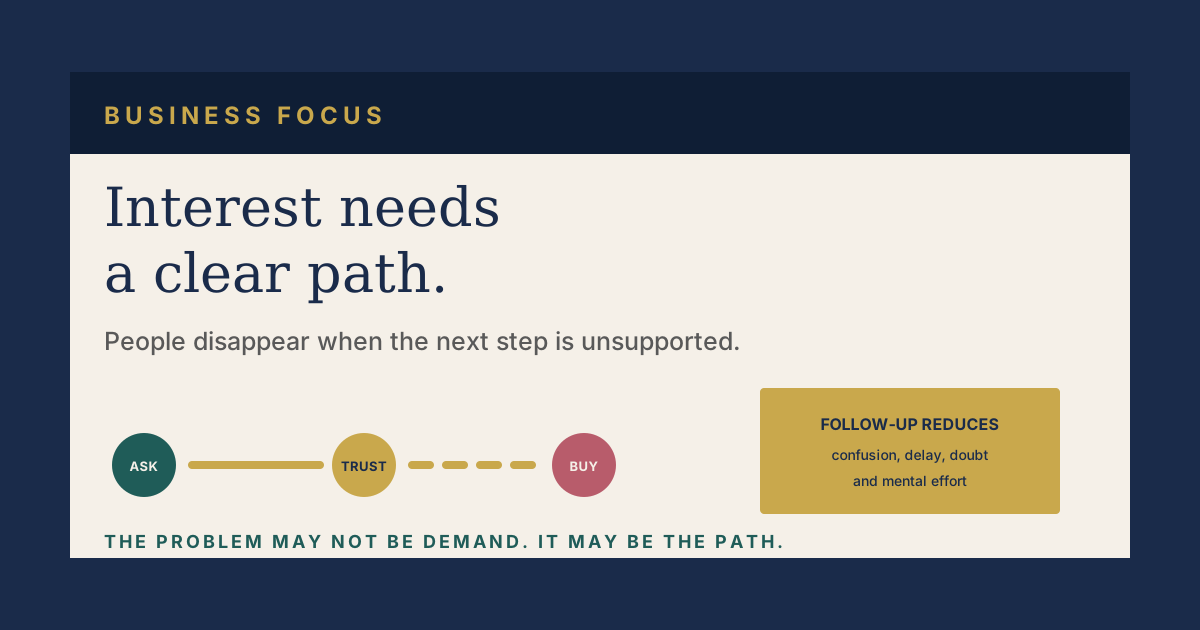
A follow-up gap happens when a potential buyer shows interest, but the business does not have a clear system to move that interest toward trust, decision, and action.
Interest does not automatically become a sale.
It needs structure.
Key Takeaways
- Interest is not the same as commitment.
- Many potential buyers disappear because the next step is unclear, slow, weak, or unsupported.
- A good follow-up system helps people move from curiosity to decision.
- Not every lead is serious, but serious leads still need guidance.
- Follow-up is not pressure when it is clear, respectful, and useful.
- If people keep asking questions but not buying, the problem may be the path between interest and action.
Introduction
Someone messages you.
They ask about your service.
They say the offer sounds useful.
They ask how it works.
You explain.
They reply positively.
Maybe they even say, "I will think about it."
Then they disappear.
You wait.
You do not want to seem pushy.
You tell yourself they will come back if they are serious.
A few days pass.
Then a week.
Then nothing.
You move on.
But the same thing keeps happening.
People show interest, but they do not buy.
They ask questions, but they do not commit.
They seem warm, but they go quiet.
At first, you may assume the problem is demand.
Maybe people do not really want the offer.
Maybe the price is wrong.
Maybe the market is not ready.
Maybe your content is not strong enough.
Maybe you need more leads.
But sometimes the problem is not the number of people entering the conversation.
The problem is what happens after they enter.
You may not have a lead problem.
You may have a follow-up gap.
Interest Needs Direction
When someone shows interest, they are not always ready to buy immediately.
Sometimes they are curious.
Sometimes they are comparing options.
Sometimes they are trying to understand the value.
Sometimes they are emotionally close to the problem but practically unsure.
Sometimes they need reassurance.
Sometimes they need clarity about the process.
Sometimes they need to understand whether the offer is for their situation.
This is why interest needs direction.
A buyer may not know what to ask next.
They may not know what the decision requires.
They may not know whether now is the right time.
They may not know what will happen after payment.
They may not know what problem your offer actually solves.
If you leave them alone inside that uncertainty, they may not reject you directly.
They may simply disappear.
Not because they were never interested.
Because the interest had no structure to move through.
The Follow-Up Gap
The follow-up gap is the space between someone showing interest and someone taking action.
Many businesses focus heavily on getting attention.
Content.
Posts.
Website visits.
Inquiries.
Messages.
Leads.
But they do not design the path that happens after attention.
So people enter the conversation, but they do not move forward.
The gap may be caused by slow replies.
Unclear explanations.
Weak calls-to-action.
No follow-up message.
No decision deadline.
No simple booking process.
No answer to common objections.
No trust-building step.
No clear summary after the conversation.
The founder thinks, "They were not serious."
Sometimes that is true.
But sometimes the founder did not guide the buyer clearly enough.
A serious buyer can still hesitate when the path is unclear.
Not Every Lead Is a Buyer
This must be understood clearly.
Not everyone who asks a question will buy.
Some people are only browsing.
Some are comparing.
Some are curious but not ready.
Some cannot afford the service.
Some do not have urgency.
Some only want free advice.
Some like the idea but do not want to take action.
That is normal.
The goal of follow-up is not to force everyone to buy.
The goal is to help the right people make a clear decision.
A good follow-up system separates curiosity from commitment.
It does not chase everyone endlessly.
It does not pressure uninterested people.
It simply gives serious people enough clarity to move forward.
That is the difference.
Follow-up is not begging.
Follow-up is guidance.
Why Founders Avoid Follow-Up
Many founders avoid follow-up because they do not want to feel salesy.
They do not want to pressure people.
They do not want to look desperate.
They do not want to annoy someone.
They tell themselves, "If they want it, they will come back."
Sometimes they will.
Often, they will not.
Not because they do not care.
Because people are busy, distracted, uncertain, overwhelmed, and full of competing priorities.
A buyer may genuinely intend to reply and then forget.
They may want the service but feel unsure.
They may be waiting for permission, money, timing, or confidence.
They may need one more clear message to help them decide.
When you do not follow up, you are not always being respectful.
Sometimes you are leaving the buyer alone with confusion.
Respectful follow-up is not pressure.
It is service.
The Difference Between Pressure and Follow-Up
Pressure tries to force a decision.
Follow-up helps a decision become clear.
Pressure ignores the buyer's readiness.
Follow-up respects it.
Pressure creates fear.
Follow-up creates understanding.
Pressure says, "Buy now or lose."
Follow-up says, "Here is the next step if this still feels relevant."
Pressure keeps pushing after someone has clearly said no.
Follow-up checks in with clarity and leaves room for choice.
This distinction matters because many good business owners avoid follow-up because they confuse it with pressure.
But silence is not always noble.
Sometimes silence loses the people who needed help deciding.
A professional business should know how to follow up without becoming aggressive.
Why Interested People Disappear
People disappear for many reasons.
Some disappear because they were never serious.
Some disappear because the price was outside their budget.
Some disappear because they felt embarrassed to say no.
Some disappear because they got distracted.
Some disappear because the decision was not urgent enough.
Some disappear because they did not understand the value.
Some disappear because the next step felt too complicated.
Some disappear because they had unanswered doubts.
Some disappear because the follow-up was missing.
If you assume every disappearance means "bad lead," you may miss important learning.
Instead, ask:
Where did the conversation stop?
What question did they ask last?
What information may have been missing?
Did I make the next step clear?
Did I follow up at the right time?
Did I help them understand the decision?
This turns disappearance into diagnosis.
The Buyer's Trust Path
Before someone buys, they usually need to pass through a trust path.
They need to trust that you understand their problem.
They need to trust that your offer is relevant.
They need to trust that the process is clear.
They need to trust that the outcome is worth the cost.
They need to trust that you can deliver.
They need to trust that the next step is safe enough to take.
If any part of this path is weak, the buyer may hesitate.
Many founders only focus on the offer itself.
But buyers also need the path around the offer.
What happens after they inquire?
How clearly do you explain?
How quickly do you respond?
How do you answer objections?
How do you summarize the fit?
How do you make payment or booking easy?
A strong trust path makes buying feel less uncertain.
Your Follow-Up Should Reduce Mental Effort
A buyer should not have to work too hard to understand what to do next.
If they have to scroll back through messages, reread long explanations, compare confusing options, or ask basic questions repeatedly, they may delay.
A good follow-up reduces mental effort.
It summarizes the offer.
It names the problem.
It confirms the fit.
It explains the process.
It clarifies the price.
It gives the next step.
It answers the most likely concern.
It makes the decision easier to understand.
The goal is not to overwhelm the buyer with more information.
The goal is to give them the right information at the right moment.
Clarity converts better than pressure.
The First Reply Matters
The first reply after an inquiry is important.
Many sales conversations weaken because the first reply is too casual, too vague, or too overloaded.
Someone asks:
"How does this work?"
The founder replies with a long explanation that includes everything.
Or they reply too briefly:
"Yes, I can help. Let me know."
Neither is ideal.
A strong first reply should do three things.
Acknowledge the person's situation.
Explain the offer simply.
Guide the next step.
For example:
"Thanks for reaching out. This session is usually for people who feel stuck between too many directions and need a structured way to decide the next move. The process is a one-to-one clarity session where we diagnose the current situation, identify the real problem, and map the next step. If you want, I can share the booking details."
This kind of reply creates direction.
It does not dump information.
It guides.
The Follow-Up Message Matters
If someone shows interest and then goes quiet, follow up.
Not with guilt.
Not with pressure.
With clarity.
A useful follow-up might say:
"Just checking in. From what you shared, this sounds like something the session could help clarify. The main goal would be to understand the pattern, separate the real issue from the surface issue, and decide the next responsible step. If you would like to move forward, the next step is booking a time."
That is not pushy.
It is clear.
Another follow-up could say:
"I know these decisions can take time. If this still feels relevant, I can help you decide whether the session is the right fit before you book."
This gives space while keeping the path open.
The point is not to chase.
The point is to guide the person back to the decision.
Follow-Up Should Be Timed
Follow-up works better when it has timing.
If someone inquires today, you may follow up within 24 to 48 hours if they do not respond.
If they say they need to think, follow up after a few days.
If they say they will come back later, ask when would be useful to check in.
Do not leave every conversation floating.
Floating conversations become lost opportunities.
A simple rhythm could be:
First reply: immediately or as soon as possible.
First follow-up: 24 to 48 hours later.
Second follow-up: three to five days later.
Final follow-up: one week later, with a respectful close.
After that, stop.
The goal is not endless pursuit.
The goal is structured clarity.
The Respectful Close
Not every lead should stay open forever.
If someone does not respond after a few follow-ups, close the loop politely.
You can say:
"I will close the loop here for now. If this becomes relevant again later, you are welcome to reach out."
This does two things.
It respects the person.
And it protects your own energy.
A business should not carry every open conversation forever.
Open leads create mental clutter.
A respectful close gives both sides clarity.
It also makes your business feel more professional.
You are not begging.
You are managing the conversation.
Why Follow-Up Needs a System
If follow-up depends on memory, it will fail.
You will forget.
You will get busy.
You will avoid it.
You will remember too late.
You will follow up with some people but not others.
That is why follow-up needs a system.
It can be simple.
A spreadsheet.
A CRM.
A note.
A calendar reminder.
A label in your inbox.
A follow-up board.
The system should track:
Name.
Date of inquiry.
Problem they mentioned.
Offer discussed.
Last message.
Next follow-up date.
Status.
This does not need to be complicated.
It needs to be visible.
If interested people disappear and you have no tracking system, you are depending too much on memory.
Memory is not a sales system.
The Questions You Should Track
Your follow-up system should not only track names.
It should track learning.
What questions do people keep asking?
Where do conversations slow down?
Which objections appear repeatedly?
What part of the offer is unclear?
What type of person is most interested?
Which content brings better inquiries?
Which price questions repeat?
Which follow-up messages lead to replies?
This information is valuable.
It helps you improve the offer, website, messaging, and sales process.
If you do not track conversations, you lose the learning.
Every inquiry becomes isolated.
A stronger business turns repeated conversations into business intelligence.
Your Website Should Support Follow-Up
A good follow-up system should not depend only on private messages.
Your website should support the buying path.
If someone asks about your offer, you should be able to send them a clear page.
The page should explain:
Who the offer is for.
What problem it solves.
What happens inside the process.
What result they can expect.
Who it is not for.
How to book.
What happens after booking.
If your website does not answer these questions, every lead requires a custom explanation.
That makes follow-up heavier.
A clear offer page reduces confusion.
It allows the buyer to review the information privately.
It also makes your business feel more stable and trustworthy.
Content Should Prepare the Follow-Up
Good content makes follow-up easier.
If your articles, posts, and emails already explain the problem, the buyer enters the conversation with more awareness.
For example, if someone reads an article about offer clarity, they may already understand why their business is not converting.
If they read an article about career burnout, they may already understand that the issue may require diagnosis.
If they read an article about relationship loneliness, they may already have language for their problem.
Content should help people recognize themselves before they inquire.
Then follow-up helps them decide what to do next.
Content creates recognition.
Follow-up creates movement.
Both are needed.
Stop Treating Every Conversation as Custom
Some conversations need personal care.
But many sales conversations repeat the same patterns.
The same questions.
The same doubts.
The same confusion.
The same objections.
The same explanations.
If you keep typing everything from zero, follow-up becomes exhausting.
Create reusable follow-up assets.
A short offer explanation.
A booking message.
A price explanation.
A process summary.
A "who this is for" message.
A "not the right fit" message.
A respectful close message.
These are not scripts for manipulation.
They are tools for clarity.
They help you stay consistent and professional.
You can still personalize them.
But you do not need to rebuild the whole conversation each time.
The Follow-Up Gap Test
Use this test to diagnose your business.
When someone shows interest, do they know the next step?
Do you reply with a clear explanation?
Do you follow up if they go quiet?
Do you track open conversations?
Do you know where people usually disappear?
Do you have answers to common objections?
Do you have a clear offer page to send?
Do you close the loop respectfully when someone does not respond?
Do you learn from repeated questions?
Do you make the buying process easy?
If the answer is no, your business may not have a demand problem.
It may have a follow-up problem.
What Not to Do
Do not shame people for not replying.
Do not send desperate messages.
Do not over-explain after every silence.
Do not keep chasing people who have clearly said no.
Do not assume every inquiry is serious.
Do not treat follow-up as begging.
Do not leave every warm lead floating in your head.
Do not avoid follow-up because you are afraid of rejection.
Do not confuse politeness with passivity.
A mature business knows how to invite action clearly and accept the answer gracefully.
That is the balance.
What a Better Follow-Up System Looks Like
A better system is simple.
When someone inquires, you respond clearly.
You identify what problem they are trying to solve.
You explain the relevant offer.
You make the next step clear.
You follow up at least once if they go quiet.
You answer objections with useful clarity.
You track the conversation.
You close the loop if there is no response.
You review repeated patterns.
You improve the offer, page, or message based on what you learn.
This does not require a complicated sales machine.
It requires discipline.
A business grows when interested people are not left unsupported between curiosity and commitment.
Follow-Up Is Part of Service
Many founders treat follow-up as separate from service.
They think service begins after the sale.
But the buyer experience begins before the sale.
How you respond to questions matters.
How you guide uncertainty matters.
How you explain the offer matters.
How you handle hesitation matters.
How you close the loop matters.
A clear follow-up process shows the buyer how you think.
It shows professionalism.
It shows care.
It shows structure.
If your follow-up is scattered, slow, unclear, or passive, the buyer may assume the delivery will feel the same.
Your sales process is often the first sample of your service quality.
Final Thought
If people show interest but disappear before buying, do not immediately assume there is no demand.
Look at the gap.
What happens after they ask?
Is the offer explained clearly?
Is the next step obvious?
Is trust being built?
Are objections being answered?
Is follow-up happening?
Are conversations being tracked?
Are you guiding interest toward decision, or leaving people to figure it out alone?
Interest does not automatically become action.
It needs a path.
A buyer may like your work and still hesitate.
They may need clarity.
They may need timing.
They may need reassurance.
They may need a simpler next step.
They may need one respectful follow-up.
Your job is not to pressure them.
Your job is to guide the decision clearly.
Because a business does not grow only by attracting attention.
It grows by helping the right people move from interest to commitment.
And that movement often happens in the follow-up gap.
Need Business Focus?
If your business is getting interest but not enough buyers, the problem may not be more visibility.
It may be the path between inquiry and decision.
A structured Business Focus session can help you identify where potential buyers disappear, what follow-up system is missing, and how to make the next step clearer.
You do not need to chase people.
You need a clearer trust path.
Book a Business Focus Session
If people show interest but disappear before buying, a Business Focus session can help you diagnose the trust path, follow-up system, offer clarity, and next-step structure between inquiry and commitment.