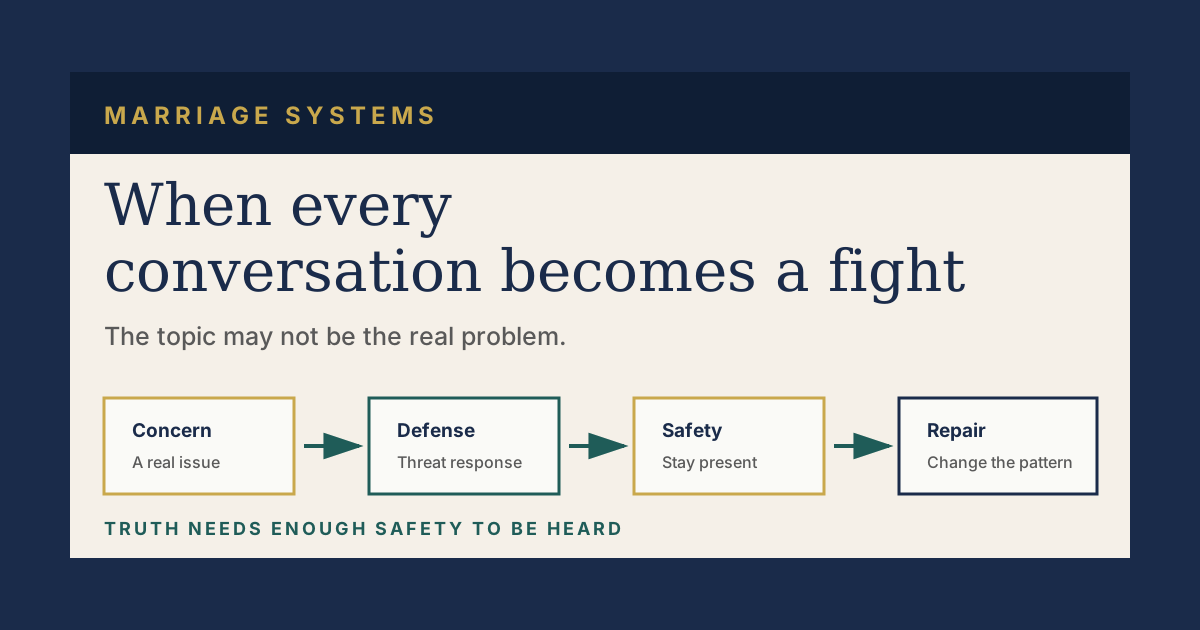
Every conversation turns into blame when a concern is heard as an attack, the response becomes defensive, and both people begin arguing about fault instead of the issue that needs attention. The way out is not to pretend nobody has responsibility. It is to separate accountability from accusation.
Blame Makes the Original Problem Disappear
One person raises a concern: a broken agreement, emotional distance, a decision made alone, or a recurring pattern. The other person hears criticism and responds with a counter-accusation.
“You always make me the bad person.”
“What about what you did last week?”
“Nothing I do is ever enough for you.”
At that point, the conversation has moved away from the original problem. Both people may be hurt, but neither is dealing with the concern that started the conversation.
This is why a relationship can have many conversations without much repair. The energy goes into defending identity rather than understanding impact.
The Accusation-Defence Cycle
Blame often follows a predictable sequence:
- A concern is raised. “I felt alone when we did not speak for several days.”
- The concern is heard as a verdict. “You are saying I do not care.”
- Defence becomes a counter-accusation. “You are difficult to talk to too.”
- The first person pushes harder. They add examples, speak more sharply, or try to prove the point.
- Both people leave feeling misunderstood. The original concern remains unresolved until it returns again.
The cycle is not solved by deciding who began it. It is solved when both people can notice the shift from issue to blame and return to the actual concern.
Accountability Is Not the Same as Blame
Accountability asks, “What happened, what impact did it have, and what needs to change?” Blame asks, “Who is the problem here?”
Accountability can be specific. It can include both people. It creates a next step.
Blame uses broad labels: selfish, cold, impossible, dramatic, careless. It makes one person defend their character before either person can discuss the pattern.
A relationship needs accountability. It cannot repair without it. But accountability becomes difficult when every concern is framed as evidence that one person is fundamentally bad.
The goal is not to remove responsibility from the conversation. The goal is to make responsibility specific enough that repair is possible.
How to Raise a Concern Without Starting With an Accusation
Use a simple structure: pattern, impact, request.
Pattern: name what happened without assigning a motive you cannot prove. “When we stop speaking after an argument and do not return to it...”
Impact: say what the pattern is doing. “...I feel alone and unsure whether we are handling problems together.”
Request: ask for one clear next step. “I need us to choose a time this week to finish the conversation and agree on what changes next.”
This does not guarantee a good response. It does make the actual issue easier to see and reduces the need to defend against a character judgment.
What to Do When the Conversation Turns Back on You
If your partner responds with another complaint, do not pretend their concern is unimportant. But do not lose the first issue either.
Try: “I am willing to discuss that too. Right now I want to finish the concern I raised, then we can give yours the same attention.”
This creates a boundary around the conversation without dismissing the other person. A fair relationship has room for both concerns. It does not use one concern to erase the other.
If discussions regularly escalate beyond either person's ability to stay present, read Why Every Conversation Turns Into a Fight - and How to Break the Blame Cycle for the wider conflict pattern.
When Blame Is a Way to Avoid Repair
Sometimes blame is a clumsy reaction to shame, fear, or feeling criticized. A calmer structure and a short pause can help both people return to the problem.
But sometimes blame becomes a repeated way to avoid responsibility. Every concern is dismissed as your tone, your timing, your memory, or your personality. The person raising the issue ends up apologising for having raised it at all.
Watch what happens after the conversation. Does your partner return to the issue, acknowledge any impact, and participate in change? Or do you become responsible for explaining, calming, forgiving, and restarting everything alone?
Why Forgiving Someone Does Not Fix the Pattern - What Real Change Looks Like can help you distinguish an apology from ongoing repair. If silence follows every difficult conversation, see Why Men Go Silent in Relationships - and What to Do Next.
Four Rules for a Fairer Conversation
- One issue at a time. Do not turn one concern into a list of every past failure.
- No character labels. Describe the action, pattern, or decision rather than naming the person as the problem.
- Take a pause with a return time. A pause can protect the conversation; disappearing from it leaves the problem untouched.
- End with an observable next step. Decide what will happen, who will do it, and when you will revisit it.
For the difference between a healthy pause and a pause that prevents accountability, read When Emotional Safety Becomes Avoidance in a Relationship.
When Not to Manage This Alone
If blame is paired with coercion, threats, humiliation, isolation, fear, retaliation, stalking, or violence, prioritize safety and seek qualified local support. A communication structure is not a solution for abuse or immediate danger.
For recurring conflict without immediate danger, the Relationship Readiness Map can help you reflect on communication, responsibility, and what needs to change before the next serious conversation.
Why does every conversation turn into blame?
Conversations turn into blame when a concern is heard as an attack, the response becomes defensive, and attention shifts from the actual issue to proving who is at fault.
How do you stop blaming each other in a relationship?
Stay with one observable pattern, avoid character labels, explain the impact, make one clear request, and agree on a time to return if either person needs a pause.
What should I do when my partner blames me for everything?
Do not accept every accusation as the subject of the conversation. Name the original issue, ask to discuss one concern at a time, and observe whether your partner can return to the problem without dismissal or retaliation.
Get clarity on the pattern before the next fight
A Marriage Clarity Session can help you map the communication pattern, identify what is actually being avoided, and choose a practical next step.
Disclaimer: This article is educational and reflective. It is not therapy, clinical counselling, legal, medical, financial, or religious advice. If there is abuse, coercion, self-harm, violence, or immediate danger, contact appropriate qualified or emergency support.