Emotional safety is the ability to tell the truth without fear of humiliation, threats, punishment, or retaliation. It is not a requirement that every difficult conversation feel easy. And it is not a reason for an important issue to disappear forever.
This distinction matters because people can use the same words for very different situations. One person may genuinely need distance because they feel afraid, overwhelmed, or unsafe. Another may need a short pause to regulate before continuing. A third may use the language of safety to prevent any accountability, repair, or return to the subject.
Those situations are not the same. Treating them as the same can either dismiss a real safety concern or allow a relationship to become stuck in avoidance.
What Emotional Safety Actually Means
A relationship has emotional safety when both people can raise a concern without being mocked, threatened, insulted, punished with prolonged silence, or made responsible for the other person's reaction. It means honesty has room to exist.
It does not mean there will be no discomfort. Honest conversations about money, family, trust, sex, parenting, jealousy, responsibility, and broken agreements can be uncomfortable even in a healthy relationship. Discomfort is not automatically danger.
The useful question is: can both people name what happened, stay respectful, and return to repair after they have calmed down?
When Safety Must Come First
Do not use this article to pressure someone to continue a conversation where there is violence, intimidation, coercive control, threats, stalking, self-harm threats, sexual pressure, or fear of retaliation. In those situations, safety and qualified local support come before relationship repair.
Safety can also require a pause when someone is flooded, panicking, dissociating, or unable to think clearly. A pause is not a failure. It can be a responsible way to stop a conversation from becoming harmful.
But a pause works only when it has a return path.
A pause protects a relationship when it helps people return with more clarity. It becomes avoidance when it removes the issue without a plan to revisit it.
The Difference Between a Boundary, a Pause, and Avoidance
A boundary
A boundary names what you will and will not participate in. For example: "I will talk about this, but I will not stay in a conversation where I am being shouted at." A boundary protects dignity and still makes the expectation clear.
A healthy pause
A healthy pause says: "I am too overwhelmed to do this well right now. I will come back at 7 p.m. tomorrow." It reduces escalation while preserving responsibility for the conversation.
Avoidance
Avoidance ends the conversation without naming a specific risk, without a return time, and without any path for the concern to be addressed. The other person is then left managing the uncertainty, the issue, and the relationship's future alone.
When Safety Language Starts Replacing Accountability
Safety language becomes a concern when every request for repair is treated as an attack, every hard question is called harmful without explanation, and no alternative time or format for the conversation is offered.
This is not an invitation to argue with someone about whether they feel safe. Feelings and safety concerns should be heard seriously. The issue is whether the relationship has any workable process for addressing what happened.
Look for the pattern rather than one difficult moment:
- Does a pause include a specific return time?
- Can either person raise a concern without the topic becoming permanently forbidden?
- Is there a clear description of what felt unsafe and what would make a future conversation safer?
- Do apologies, agreements, and boundaries lead to changed behavior?
- Is one person carrying all the work of initiating, calming, and repairing?
If every serious conversation turns into blame or shutdown, read Why Every Conversation Turns Into a Fight. If promises are repeated without visible change, Why Forgiving Someone Does Not Fix the Pattern helps separate apology from repair.
How to Return to a Difficult Conversation Safely
Use a simple return process. It is more useful than demanding that a conversation continue while either person is overwhelmed.
- Name the pause: "I need to stop for now because I am becoming reactive."
- Name the return time: Choose a specific time within a reasonable period.
- Name the issue: State what must be returned to so it does not disappear.
- Set one rule: No insults, threats, interruption, or bringing in unrelated history.
- Make one request: Ask for one clear action, acknowledgement, or next step.
This does not solve every relationship problem. It does make it possible to see whether both people are willing to participate in repair.
What Not to Do
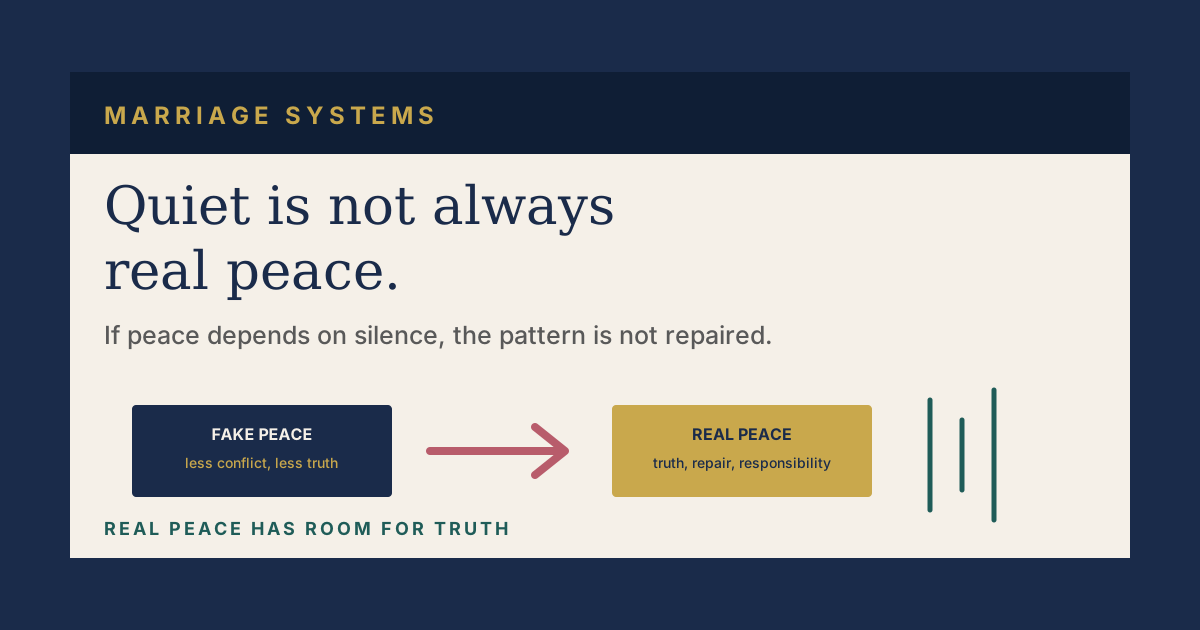
Do not force a conversation through fear or flooding. Do not use "you are avoiding" as a weapon when someone has named a real risk. Do not let repeated withdrawal become normal without asking how and when the issue will return. And do not confuse silence with peace.
If the relationship feels calm only because you stopped telling the truth or asking for what you need, read The Quiet Cost of Stopping Asking for What You Need. The broader Relationship Clarity Guide can help you identify the pattern before you decide what to do next.
When to Get Help
Outside support can be useful when the same conflict repeats, a serious issue cannot be discussed without shutdown, or both people disagree about what safe repair looks like. The Relationship Readiness Map offers a private starting point for reflecting on communication, responsibility, and readiness. For abuse, coercion, threats, or immediate danger, contact qualified local or emergency support rather than relying on coaching or an online article.
What is emotional safety in a relationship?
Emotional safety means both people can raise concerns, tell the truth, and set boundaries without humiliation, threats, retaliation, or fear. It does not require every conversation to feel comfortable.
Can asking for a pause be healthy?
Yes. A pause can protect a conversation when someone is overwhelmed, provided it includes a clear return time and is not used to avoid the issue indefinitely.
Can safety language be used to avoid accountability?
Sometimes people use the language of safety to end any difficult conversation without naming a specific risk or agreeing on a return process. That is different from genuine fear, abuse, coercion, or threats, where safety must come first.
Map the pattern before the next difficult conversation
A Marriage Clarity Session offers structured reflection on communication, responsibility, repair, and the decision that may be waiting underneath the conflict.
Disclaimer: This article is educational and reflective. It is not therapy, clinical counselling, legal, medical, financial, or religious advice. If there is abuse, coercion, self-harm, violence, or immediate danger, contact appropriate qualified or emergency support.