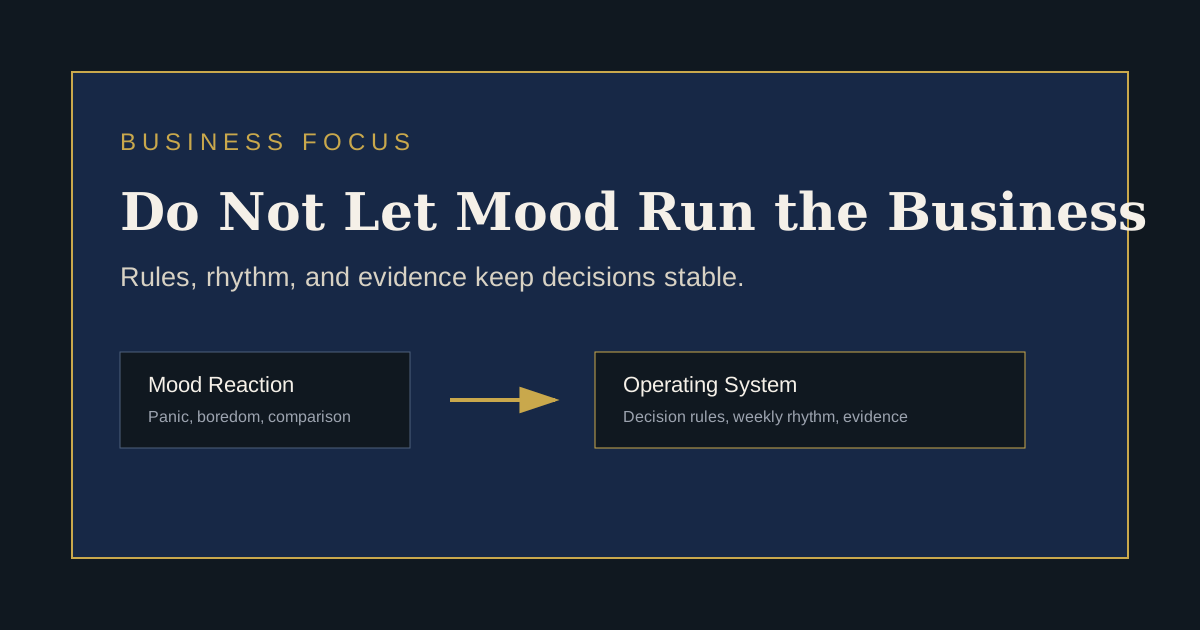
Summary
Some businesses do not struggle because the founder lacks ideas.
They struggle because the founder's mood is running the business.
When confidence is high, the founder creates content, launches offers, replies to leads, makes plans, and feels clear.
When confidence drops, everything slows down.
The offer feels wrong.
The audience feels silent.
The business feels pointless.
The founder disappears, changes direction, delays decisions, or starts something new.
This creates an unstable business.
Not because the founder is lazy.
Because the business has no operating system strong enough to continue when emotions change.
A business cannot depend only on motivation, excitement, confidence, or urgency.
It needs rules, rhythms, priorities, and decision structures that keep the work moving even when the founder's mood is not ideal.
Key Takeaways
- Founder mood can quietly control business consistency, offers, marketing, sales, and decisions.
- A business that only moves when the founder feels confident will grow unpredictably.
- Emotional reactions often look like strategic decisions from the inside.
- You need business rules that protect the work from panic, boredom, fear, and overexcitement.
- Systems do not remove emotion, but they stop emotion from controlling every move.
- Business focus means knowing what to do even when your mood changes.
Introduction
Some days, the business feels exciting.
You have energy.
You post content.
You respond to messages.
You improve the website.
You think of new offers.
You feel ready.
You feel like the business is finally moving.
Then a few quiet days happen.
A post gets no response.
A lead disappears.
A client delays payment.
A launch feels weaker than expected.
Someone else seems to be growing faster.
Suddenly, your mood changes.
Now the same business feels confusing.
The offer feels wrong.
The audience feels uninterested.
The plan feels heavy.
The work feels pointless.
You start questioning everything.
Maybe I should change the offer.
Maybe this niche is wrong.
Maybe I need a new brand.
Maybe I should pause.
Maybe I am not built for this.
This is how mood begins managing the business.
Not loudly.
Quietly.
One emotional reaction at a time.
The Problem Is Not That You Have Emotions
Founders are human.
You will feel excited.
You will feel discouraged.
You will feel confident.
You will feel uncertain.
You will feel focused.
You will feel tired.
You will feel proud.
You will feel embarrassed.
That is normal.
The problem is not having emotions.
The problem is letting every emotion become a business decision.
A low mood becomes a decision to stop posting.
Fear becomes a decision to lower the price.
Boredom becomes a decision to create a new offer.
Silence becomes a decision to change direction.
Comparison becomes a decision to copy someone else.
Stress becomes a decision to delay sales.
Excitement becomes a decision to start five things at once.
This is where the business becomes unstable.
The founder is not only feeling emotions.
The founder is obeying them.
Your Business Needs an Operating System
A business operating system is the structure that tells you what to do even when your mood changes.
It includes your main offer.
Your weekly priorities.
Your content rhythm.
Your follow-up process.
Your decision rules.
Your sales process.
Your review system.
Your boundaries.
Your definition of what matters this month.
Without an operating system, the founder becomes the system.
That means the business rises and falls with the founder's emotional state.
When you feel clear, the business moves.
When you feel tired, it stops.
When you feel confident, you sell.
When you feel doubtful, you hide.
When you feel inspired, you create.
When you feel discouraged, you disappear.
That is too fragile.
Your business needs structure outside your mood.
Mood-Based Business Looks Like Strategy
This is the tricky part.
Mood-based business often looks strategic from the inside.
You tell yourself you are pivoting.
But really, you are reacting to fear.
You tell yourself you are improving the offer.
But really, you are uncomfortable with silence.
You tell yourself you are researching.
But really, you are delaying the sale.
You tell yourself you are refining your brand.
But really, you are avoiding visibility.
You tell yourself you are taking a break.
But really, you are escaping disappointment.
You tell yourself you are exploring options.
But really, you are refusing to commit.
This does not mean every pivot is wrong.
Sometimes strategy needs to change.
But a strategic decision is based on evidence.
A mood-based decision is based on emotional pressure.
You need to know the difference.
Signs Your Mood Is Running the Business
One sign is inconsistency.
You work intensely for a few days, then disappear.
You post a lot, then stop.
You follow up with leads when you feel brave, then avoid them when you feel uncertain.
You improve the offer when you feel hopeful, then question it when response is slow.
Another sign is constant restarting.
Every emotional dip becomes a new beginning.
A new plan.
A new page.
A new content idea.
A new offer.
A new audience.
Another sign is overthinking after silence.
One quiet post makes you question your whole business.
One lost lead makes you question your pricing.
One slow week makes you question your direction.
Another sign is emotional pricing.
You feel confident, so the price feels right.
You feel insecure, so the price feels too high.
Another sign is that your business has no clear rhythm when life becomes busy.
If your routine disappears whenever your mood drops, the business is being held by emotion, not structure.
Confidence Is Not a Business System
Confidence helps.
But confidence is not enough.
If your business only works when you feel confident, it will not be consistent.
Confidence changes.
It rises after praise.
It drops after silence.
It grows after a sale.
It weakens after rejection.
It becomes stronger when things are moving.
It becomes fragile when nothing is visible yet.
A business cannot wait for confidence every day.
It needs a system that continues while confidence is being rebuilt.
For example:
You post because it is part of the weekly content rhythm, not because you feel amazing.
You follow up because it is part of the sales process, not because you feel brave.
You review the offer based on data, not because today you feel insecure.
You work on the main priority because it was chosen in advance, not because your mood likes it today.
Confidence is useful.
But structure is safer.
Motivation Is Not a Business Plan
Motivation often appears at the beginning.
When the idea feels fresh.
When the offer is new.
When the website looks exciting.
When people respond positively.
When the business feels full of possibility.
But motivation fades when the work becomes repetitive.
Writing content again.
Following up again.
Explaining the offer again.
Improving the same page again.
Reviewing the same numbers again.
Doing the boring work again.
This is where many founders start looking for a new idea.
Not because the old idea failed.
Because the emotional excitement faded.
But business growth usually requires staying with work after the excitement is gone.
A motivated founder can start.
A structured founder can continue.
That difference matters.
The Emotional Launch Cycle
Many founders repeat the emotional launch cycle.
First, excitement.
The idea feels powerful.
The offer feels clear.
The launch feels full of potential.
Second, exposure.
You put the offer into the world.
Now people can respond, ignore, question, or reject it.
Third, silence or slow response.
The market does not react as fast as you hoped.
Fourth, emotional drop.
You feel embarrassed, doubtful, impatient, or discouraged.
Fifth, reaction.
You change the offer, reduce the price, disappear, start a new idea, or tell yourself the market is wrong.
Then the cycle starts again.
This cycle prevents learning.
Because the offer does not stay stable long enough to be tested.
The founder keeps reacting before enough evidence exists.
Emotional Decisions Create Business Confusion
When every mood creates a change, the business becomes confusing.
The audience does not know what you are known for.
The offer keeps shifting.
The message keeps changing.
The content becomes scattered.
The website no longer matches the current direction.
The founder cannot explain the business simply.
The business looks active, but unstable.
This affects trust.
People trust businesses that feel clear.
They trust offers that feel stable.
They trust founders who can explain the problem, process, and next step consistently.
If your business changes direction every time your emotions change, the market may hesitate.
Not because your work has no value.
Because the signal is not steady enough.
The Founder Needs Decision Rules
A decision rule protects your business from emotional overreaction.
It tells you when to change something and when to stay the course.
For example:
I will not change the main offer until I have tested it consistently for thirty days.
I will not lower the price because of one lost lead.
I will not create a new offer while the current one has not been properly explained.
I will not judge content performance from one post.
I will review the business weekly, not emotionally every night.
I will follow up with every serious lead at least once.
I will choose the main priority for the week before the week begins.
These rules do not make you rigid.
They make you stable.
They prevent every emotion from becoming a new direction.
Build a Weekly Business Rhythm
A weekly rhythm gives the business a container.
It helps you know what happens regardless of mood.
For example:
Monday: choose the main priority and review open loops.
Tuesday: create or publish one piece of content.
Wednesday: improve one sales asset or offer page.
Thursday: follow up with leads and conversations.
Friday: review what moved, what did not, and what needs attention.
This is only an example.
The point is not the exact schedule.
The point is that the business has a rhythm.
Without rhythm, every week becomes a negotiation.
What should I do?
What feels urgent?
What feels exciting?
What feels easy?
What am I avoiding?
A rhythm reduces decision fatigue.
It helps the business keep moving.
Separate Feelings From Evidence
When you feel uncertain, do not immediately make a business decision.
First, separate feeling from evidence.
Feeling:
"I think nobody wants this."
Evidence:
How many people saw the offer?
How many times did you explain it?
How many conversations did you have?
How many objections appeared?
How many people fit the buyer profile?
How long did you test it?
Feeling:
"My price is too high."
Evidence:
Did people say the value was unclear?
Did the wrong audience see the offer?
Did you explain the outcome well?
Did people compare it with cheaper alternatives?
Did serious buyers ask for payment options?
Feeling:
"I should start something new."
Evidence:
Has the current thing actually been tested?
Or are you bored, discouraged, or afraid?
Feelings are real.
But they are not always accurate business data.
The Business Review Should Happen on Purpose
Many founders review their business emotionally.
Usually at night.
After a bad post.
After a quiet week.
After seeing someone else succeed.
After a disappointing conversation.
That is a dangerous time to make decisions.
A business review should happen on purpose.
Choose a time.
Look at facts.
Look at numbers.
Look at conversations.
Look at offers.
Look at content.
Look at follow-up.
Look at progress.
Look at what was actually done.
Then decide.
Do not review the whole business from a tired mood.
A tired mind often turns temporary signals into permanent conclusions.
A structured review protects you from that.
Your Content Needs Rhythm, Not Emotional Bursts
Content is one of the first things affected by mood.
When you feel inspired, you post a lot.
When you feel discouraged, you disappear.
When you feel confident, you sell.
When you feel insecure, you only educate.
When you feel ignored, you stop showing up.
This creates an uneven signal.
Your audience does not get enough repeated clarity.
A content rhythm solves this.
You do not need to post all day.
You need a realistic pattern.
For example:
One article per week.
Three short posts per week.
One offer mention per week.
One email per week.
One story or update per day.
The exact rhythm depends on the business.
But the rhythm should not depend entirely on mood.
Content is not only expression.
It is part of the business system.
Sales Needs a Process, Not Bravery
Many founders treat selling as a courage test.
If they feel brave, they invite people to buy.
If they feel nervous, they hide behind value content.
If they feel embarrassed, they stop following up.
If they feel rejected, they avoid the next conversation.
This makes sales inconsistent.
Sales needs a process.
A clear offer page.
A simple explanation.
A response template.
A follow-up rhythm.
A booking step.
A payment instruction.
A way to answer common objections.
A respectful close.
When sales has a process, you do not need to reinvent courage every time.
You follow the system.
Not mechanically.
Not coldly.
But clearly.
The process carries you when emotion is unstable.
Do Not Change the Offer Every Time You Feel Exposed
Selling an offer can feel exposing.
The offer reveals what you believe you can help with.
The price reveals what value you are willing to stand behind.
The call-to-action reveals that you are inviting a decision.
This can feel vulnerable.
So when response is slow, many founders change the offer to reduce emotional discomfort.
But change is not always improvement.
Sometimes it is protection.
Before changing the offer, ask:
Am I changing this because I have evidence?
Or because I feel exposed?
Am I improving clarity?
Or escaping discomfort?
Am I learning from the market?
Or reacting to one quiet moment?
This question can save months of scattered effort.
Stop Letting Comparison Set the Strategy
Comparison is one of the fastest ways to lose business focus.
You see someone else posting differently.
Now your content feels wrong.
You see someone else offering something new.
Now your offer feels boring.
You see someone else growing fast.
Now your pace feels embarrassing.
You see someone else with better branding.
Now your website feels unacceptable.
You see someone else charging more.
Now your price feels confused.
Comparison creates emotional urgency.
But someone else's strategy may not fit your business, stage, audience, strengths, or model.
Study the market.
Learn from people.
But do not let comparison become your business director.
Your strategy should come from your diagnosis, not your insecurity.
What Should Be Protected From Mood
Some parts of the business should not change easily.
Your main offer should not change because of one quiet week.
Your audience should not change because one post underperformed.
Your price should not change because one person hesitated.
Your content rhythm should not disappear because you feel unseen.
Your follow-up process should not stop because you feel awkward.
Your weekly priority should not change because a new idea feels exciting.
Your business identity should not collapse because someone else looks ahead.
These areas need protection.
Not because they should never evolve.
But because they should evolve from evidence, not mood.
What Can Change With Mood
Not everything needs to be forced.
Some tasks can adjust based on energy.
On a high-energy day, you can record, write, sell, plan, or create.
On a low-energy day, you can edit, organize, review, schedule, clean up systems, or do follow-up with templates.
On a tired day, you can do the minimum business rhythm.
On a clear day, you can make bigger strategic decisions.
The goal is not to ignore your energy.
The goal is to stop letting energy decide whether the business exists.
A good system gives different tasks to different energy levels.
That way, even low-energy days can support the business.
Create a Minimum Business Day
Just as life systems need minimum habits, businesses need minimum operating days.
A minimum business day is what you do when energy is low but you still want to keep the business alive.
For example:
Reply to important messages.
Check open leads.
Post one useful thought.
Move one priority forward for twenty minutes.
Update one small system.
Review tomorrow's main task.
That is enough for a hard day.
The minimum day prevents disappearance.
It tells the business:
"We are not doing everything today, but we are not vanishing."
This is especially important for solo founders.
Because when the founder disappears, the business often disappears too.
The Mood Check Before a Major Decision
Before making a major business decision, check your state.
Ask:
Am I tired?
Am I embarrassed?
Am I reacting to silence?
Am I comparing myself?
Am I avoiding sales?
Am I bored with repetition?
Am I seeking relief?
Am I trying to feel productive by changing something?
Am I making this decision during an emotional low?
If the answer is yes, pause.
Do not ignore the concern.
Write it down.
Review it during your structured business review.
Major decisions should not be made only because your nervous system wants relief.
A business needs thoughtful decisions, not emotional escapes.
The Evidence Rule
Use the evidence rule:
No major business change without repeated evidence.
One quiet post is not evidence.
One lost lead is not evidence.
One difficult week is not evidence.
One negative comment is not evidence.
One emotional dip is not evidence.
Repeated questions are evidence.
Repeated objections are evidence.
Repeated buyer confusion is evidence.
Repeated delivery problems are evidence.
Repeated lack of response after consistent testing is evidence.
Repeated mismatch between audience and offer is evidence.
This rule helps you stay grounded.
It does not stop you from changing.
It stops you from changing too early.
The Founder's Emotional Maintenance
If your mood keeps controlling the business, do not only fix the business.
Also support the founder.
You may need better sleep.
Better boundaries.
Less comparison.
More realistic planning.
A clearer weekly review.
Someone to discuss business decisions with.
A healthier relationship with rejection.
A calmer way to process slow growth.
More honest tracking.
Less emotional decision-making at night.
Business focus is not only strategic.
It is personal.
A founder who is exhausted, isolated, and constantly comparing will make unstable decisions.
Supporting the founder supports the business.
The Business Stability Test
Use this test to diagnose your business.
Does the business still move when I feel unmotivated?
Do I have a weekly rhythm?
Do I know the main offer I am focusing on?
Do I have rules for when to change the offer?
Do I review the business at a set time?
Do I follow up even when I feel awkward?
Do I keep creating content when response is slow?
Do I separate feelings from evidence?
Do I have a minimum business day?
Do I know what should stay stable this month?
If the answer is no, the business may be too dependent on your mood.
That is not a character failure.
It is a systems problem.
Final Thought
Your business cannot grow steadily if every decision depends on your mood.
Your mood will change.
Your confidence will rise and fall.
Your motivation will come and go.
Your energy will shift.
Your fear will appear.
Your excitement will fade.
Your doubt will return.
This is normal.
The question is whether the business has enough structure to continue anyway.
You do not need to become emotionless.
You need a system that can hold your emotions without being controlled by them.
A business needs rhythm.
Decision rules.
Review points.
Follow-up systems.
Content structure.
Offer stability.
Minimum operating days.
Evidence-based changes.
Without these, every feeling becomes a steering wheel.
And a business that is steered by every feeling will struggle to build trust, momentum, and focus.
So do not ask only:
"How do I feel about the business today?"
Ask:
"What did I already decide matters this week?"
"What does the system say to do next?"
"What is evidence, and what is emotion?"
"What should stay stable long enough to work?"
That is how business focus becomes real.
Not by ignoring emotion.
But by building a business that does not collapse every time emotion changes.
Need Business Focus?
If your business keeps speeding up, slowing down, changing direction, or disappearing based on your mood, the problem may not be lack of ideas.
It may be lack of structure.
A structured Business Focus session can help you identify what decisions need rules, what rhythm your business needs, and what should stop changing every time confidence drops.
You do not need to run the business from panic, excitement, or doubt.
You need an operating system strong enough to keep the business moving.
Book a Business & Opportunity Focus Session
If your business decisions keep changing with your confidence, energy, or fear, a Business Focus session can help you build clearer rules, rhythm, and operating structure.