Someone needing space is not automatically a problem. Space becomes relationship avoidance when there is no clear return, no shared plan for repair, and one person is repeatedly left to manage the uncertainty alone. The difference is not whether a person steps away. It is whether they come back and take responsibility for what the relationship needs.
Why Space Can Be Healthy
A difficult conversation can make either person flooded, defensive, tired, or unable to think clearly. Taking a short pause can stop people from saying things they will later regret. It can create room to calm down and return with more care.
Healthy space is not silence without explanation. It sounds more like: "I want to talk about this, but I am too worked up to do it well right now. Can we return to it tomorrow evening?"
That response does three things: it acknowledges the issue, protects the conversation from escalation, and creates a clear return point. The concern has not been dismissed. It has been scheduled for better attention.
When Space Turns Into Avoidance
Avoidance usually becomes visible through the pattern, not one isolated moment. The conversation is delayed again and again. A promise to talk later has no date. A serious concern disappears until the person who raised it becomes too tired to raise it again.
This is especially damaging when the same withdrawal appears whenever accountability is needed: after a broken agreement, a difficult decision, emotional distance, or a request for change.
In that pattern, the person who wants repair often becomes the planner, reminder, emotional translator, and hope-holder for both people. That is not a shared relationship task. It is one-sided emotional management.
Space protects a relationship when it leads back to responsibility. Avoidance protects a person from discomfort by leaving the relationship to carry it.
Five Signs the Pause Is Healthy
- The reason is named. The person can say they need time to settle, think, or avoid escalating.
- The pause has a return point. Both people know when they will continue the conversation.
- The concern is still acknowledged. Taking space does not mean pretending the issue is unimportant.
- There is follow-through. The person returns when they said they would, or communicates early if the time needs to change.
- Both people can have needs. The pause is not used to make one person apologise for having raised a reasonable concern.
Five Signs the Relationship Is Being Avoided
- There is never a clear return. "Later" becomes days, weeks, or the next crisis.
- Every concern becomes a problem with your tone. The issue is not discussed; the focus shifts to why you mentioned it.
- You must keep restarting the conversation. The other person does not initiate repair or follow up.
- The pattern repeats around responsibility. Withdrawal appears whenever an apology, decision, boundary, or behavioural change is needed.
- You feel calmer only when you stay silent. What looks like peace may be the result of giving up your needs.
If silence has become the price of stability, read The Relationship Feels Peaceful Because You Stopped Telling the Truth and The Quiet Cost of Stopping Asking for What You Need.
What to Say Without Turning It Into Another Fight
Do not try to force a full resolution while someone is overwhelmed. Instead, name the practical requirement for a pause to be fair:
"I understand that you need time. I need us to agree on when we will come back to this, because leaving it open makes me feel alone with the problem."
This is not a demand for instant emotional availability. It is a request for shared responsibility. You are making room for their need to pause while protecting your need not to be abandoned inside an unresolved issue.
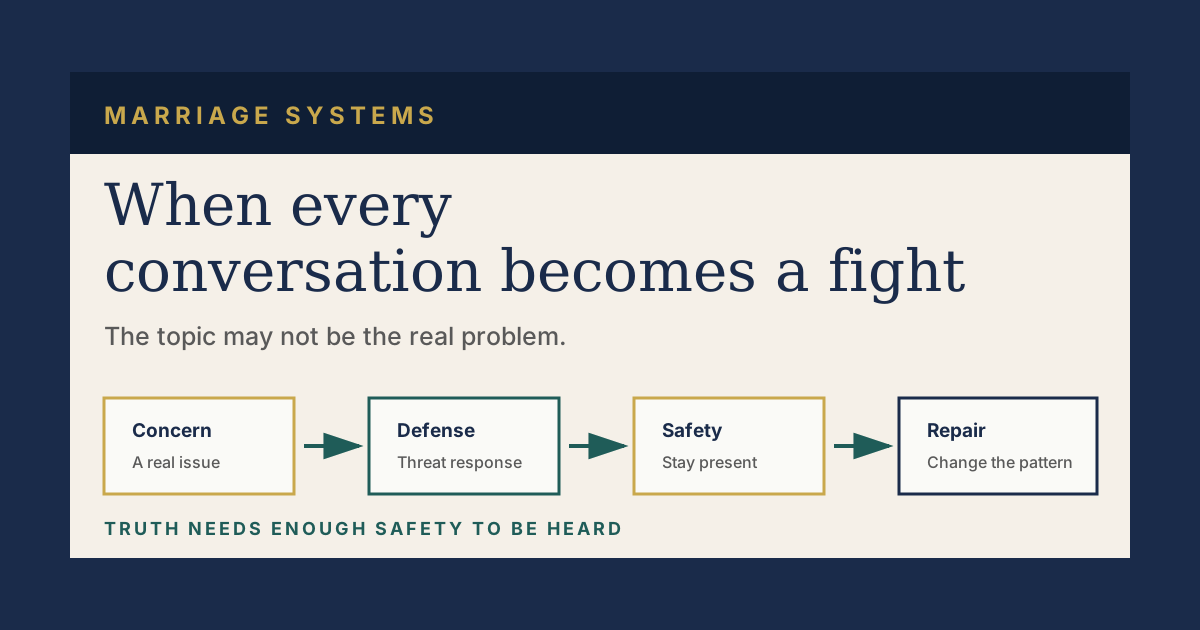
If the conversation starts turning into accusation and defence, use the structure in Why Every Conversation Turns Into Blame: How to Stop the Cycle. Keep the discussion to one pattern, one impact, and one clear request.
Do Not Confuse Explanations With Repair
Stress, mental overload, family pressure, grief, or personal struggles can all make communication harder. Those explanations deserve empathy. But they do not remove the need for repair.
A struggling partner may need a slower conversation, practical support, or qualified help. They can still say, "I know this is affecting you. I want to come back to it." An avoidant pattern keeps asking for understanding while offering no reliable path back to shared responsibility.
The most useful evidence is not a promise in the moment. It is what happens after the pause. Does the person return, listen, acknowledge impact, and participate in a next step? Or do you find yourself explaining, forgiving, and restarting everything alone?
For that distinction, see Why Forgiving Someone Does Not Fix the Pattern and When Love Feels Heavy: How to Know If You Are Carrying the Whole Relationship Alone.
When Silence Requires More Than a Communication Technique
A pause is not a solution for coercion, threats, humiliation, isolation, stalking, retaliation, or violence. If fear or abuse is present, prioritize safety and seek appropriate qualified local or emergency support. You are not responsible for communicating perfectly enough to make abuse stop.
For recurring conflict without immediate danger, a structured conversation can still be useful. The question is whether both people are willing to participate in it.
How do I know if my partner needs space or is avoiding the relationship?
Healthy space is named, time-bound, and followed by a return to the conversation. Avoidance has no clear return, leaves one person carrying repair, and repeats whenever accountability or a difficult decision is needed.
How much space is healthy in a relationship?
The amount varies, but healthy space includes clarity about why a pause is needed, how long it will last, and when the conversation will resume. It should not be used to punish, control, or erase the other person's concern.
What should I say when someone keeps avoiding difficult conversations?
Name the pattern without labelling the person, state the impact, and request a specific time to return to the issue. Then observe whether there is consistent follow-through, not only reassurance in the moment.
See the relationship pattern before the next conversation
The Relationship Readiness Map helps you reflect on communication, responsibility, boundaries, and the next honest step. It is a private self-reflection tool, not therapy or crisis support.
Disclaimer: This article is educational and reflective. It is not therapy, clinical counselling, legal, medical, financial, or religious advice. If there is abuse, coercion, self-harm, violence, or immediate danger, contact appropriate qualified or emergency support.